Steiner and Company produces the Profit Maximizer report on behalf of National Pork Board based on information we believe is accurate and reliable. However neither NPB nor Steiner and Company warrants or guarantees the accuracy of or accepts any liability for the data, opinions or recommendations expressed.
Highlights
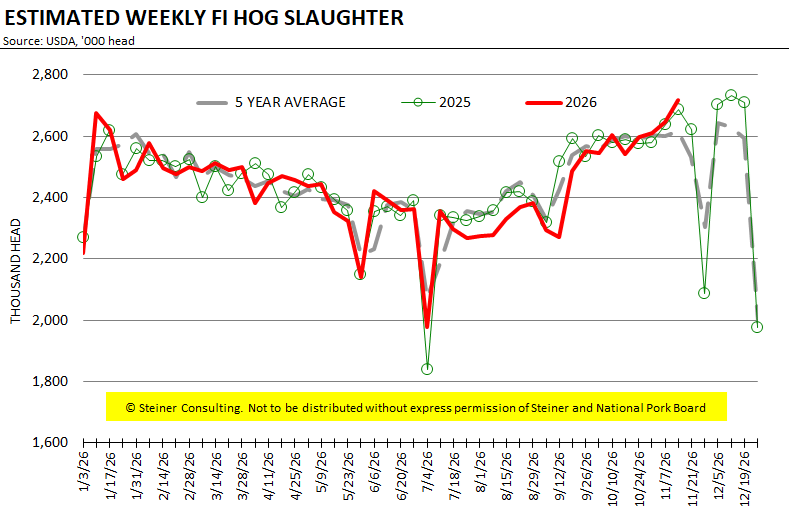
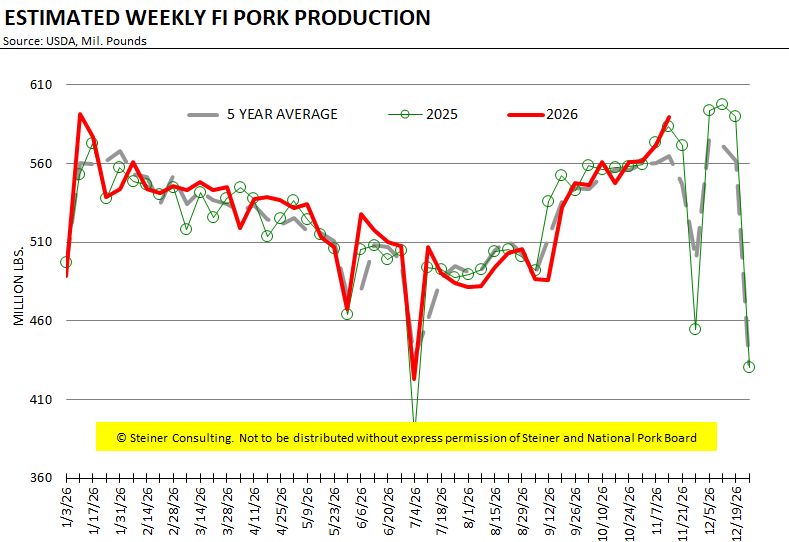
- Hog slaughter last week was the highest so far this year and nearly matched last year’s highs. Add to this the increase in carcass weights and spot supply is heavy just as processors and retailers are adjusting schedules with the upcoming holiday.
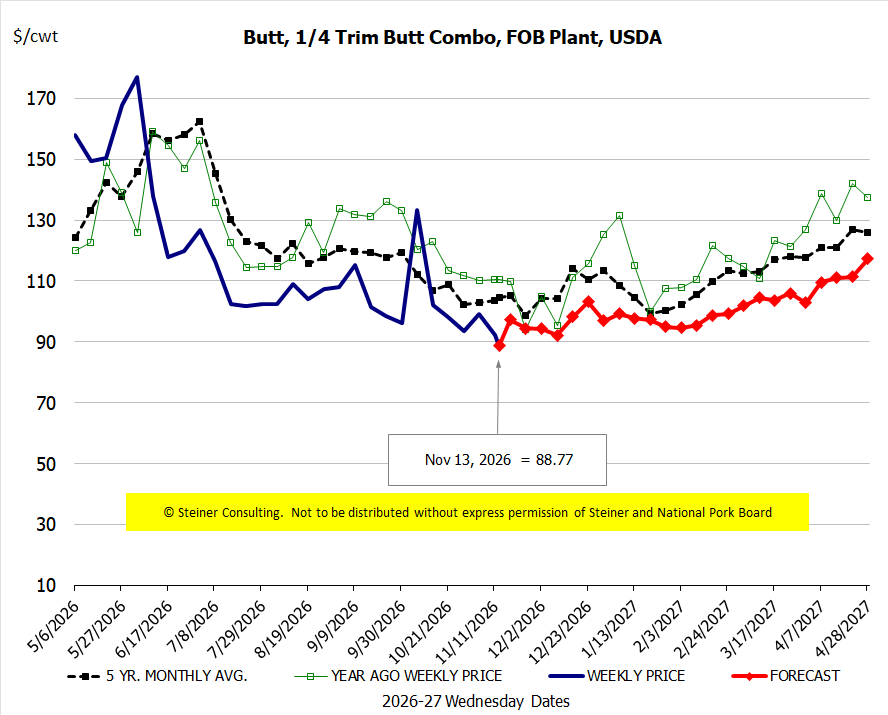
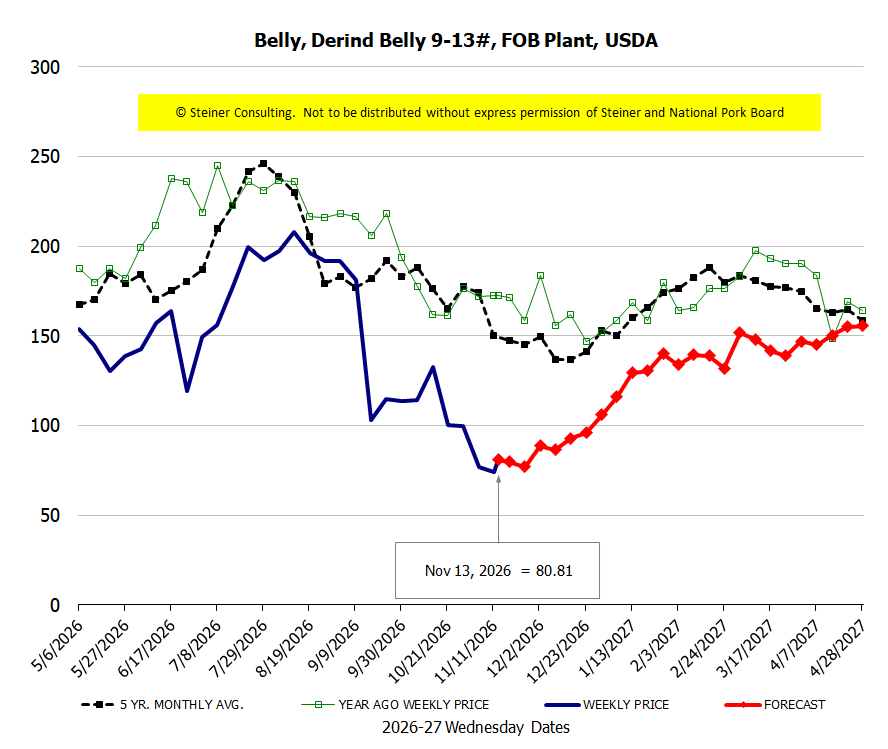
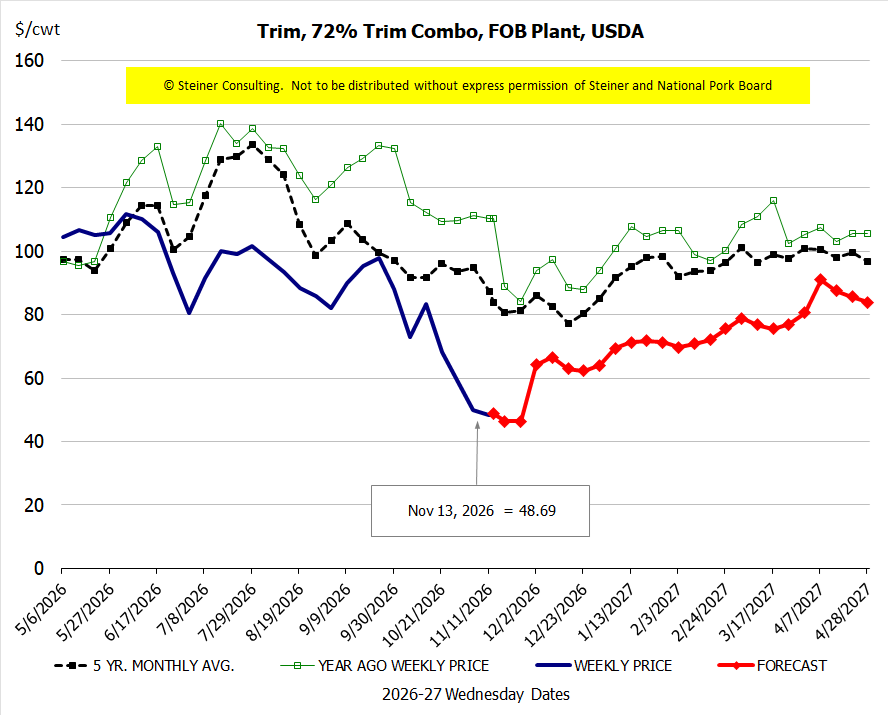
- Prices remain under pressure in the near term across all items. This is particularly the case with items that seasonally see less demand during this time of year, particularly bellies.
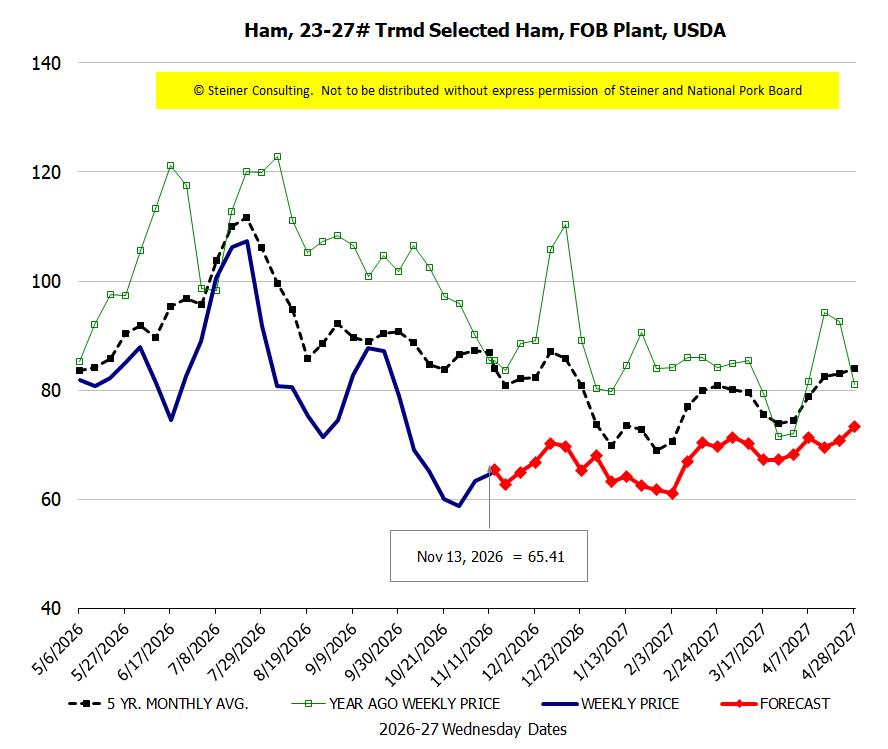
- Ham prices may see a modest improvement on last minute orders for Christmas but upside is limited. Pork supply tends to increase in the first two weeks of December ahead of two holiday shortened weeks later in the month.
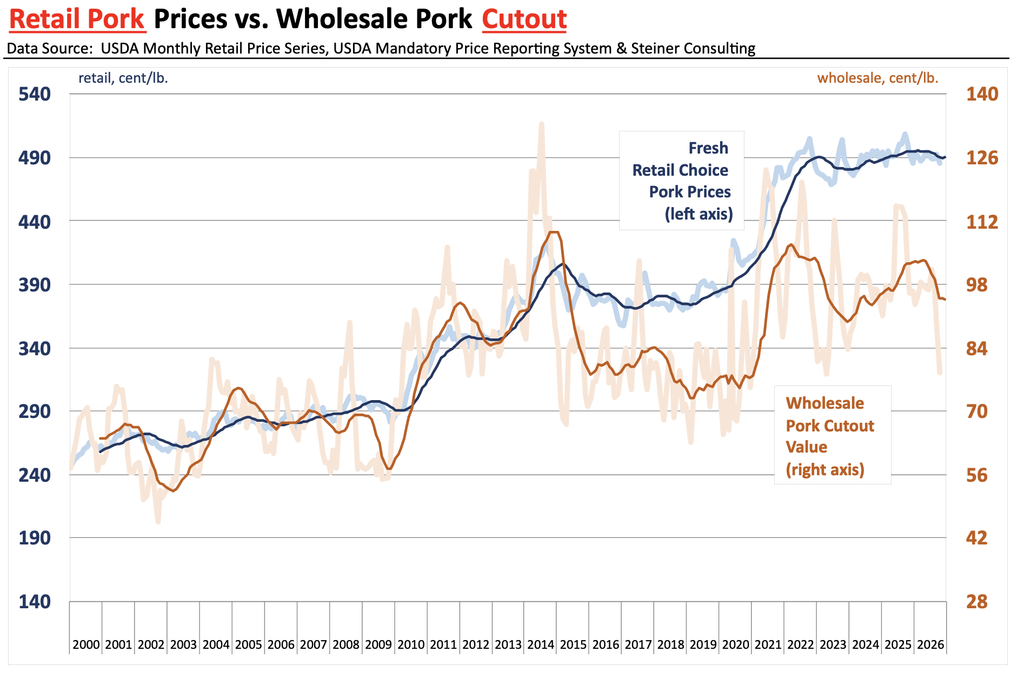
- Retail prices have barely moved in the last four years but the widening gap between wholesale and retail prices as renewed calls that lower retail prices are needed to move volume.
- In the near term pork market is expected to remain soft, both due to the seasonal uptick in supply and erosion in domestic/export demand. It will be important to take advantage of opportunities in early Q1 to start covering spring needs.
Full Report
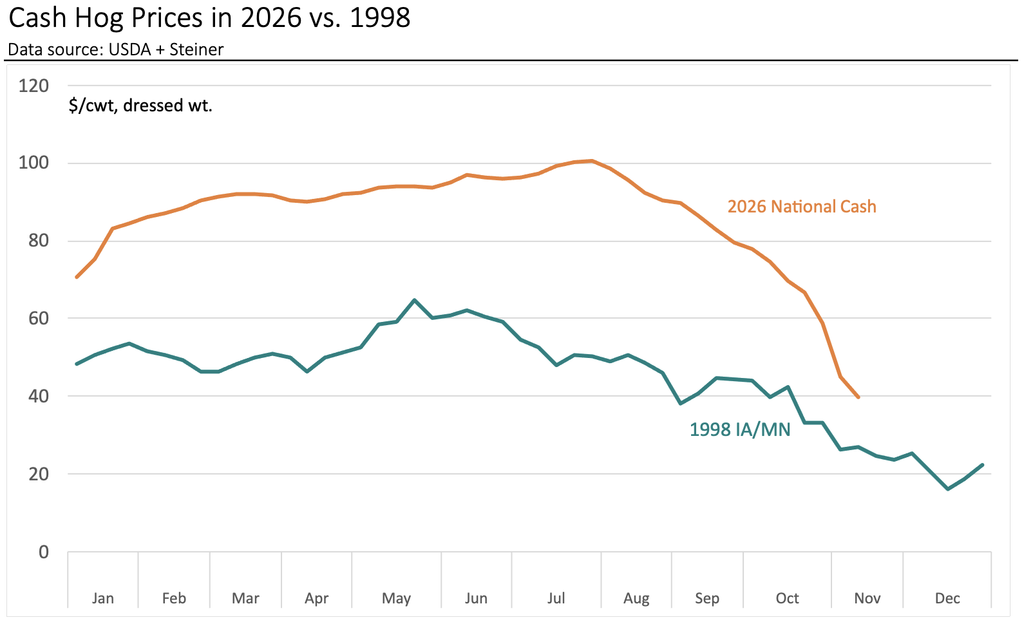
Cash hog prices: Cash hog prices last week were as low as $37/cwt, surpassing the lows we saw in 2023. Indeed, the recent collapse in prices and potential for more downside have resurfaced memories of 1998, considered the most painful year for hog producers, resulting in significant herd liquidation and restructuring. In 1998, hog prices declined from $62/cwt in mid June to $16/cwt in mid December, a 74% decline. If we convert that $16 in today’s currency is would be around $33/cwt, not far from where current prices sit. This year, the cash hog price (this is not the CME index which also captures the value of the cutout) was as high as $100/cwt in mid July but last week closed at $39/cwt, down 61%. In 1998, the price crunch was a result of industry bumping up against capacity constraints. This time around, capacity is not as much an issue as is the weakness in demand, be this at retail, foodservice or export. Lower hog prices have helped improve packer margins but the outlook is for prices to remain under pressure due to holiday disruptions to hog and meat processing schedules.
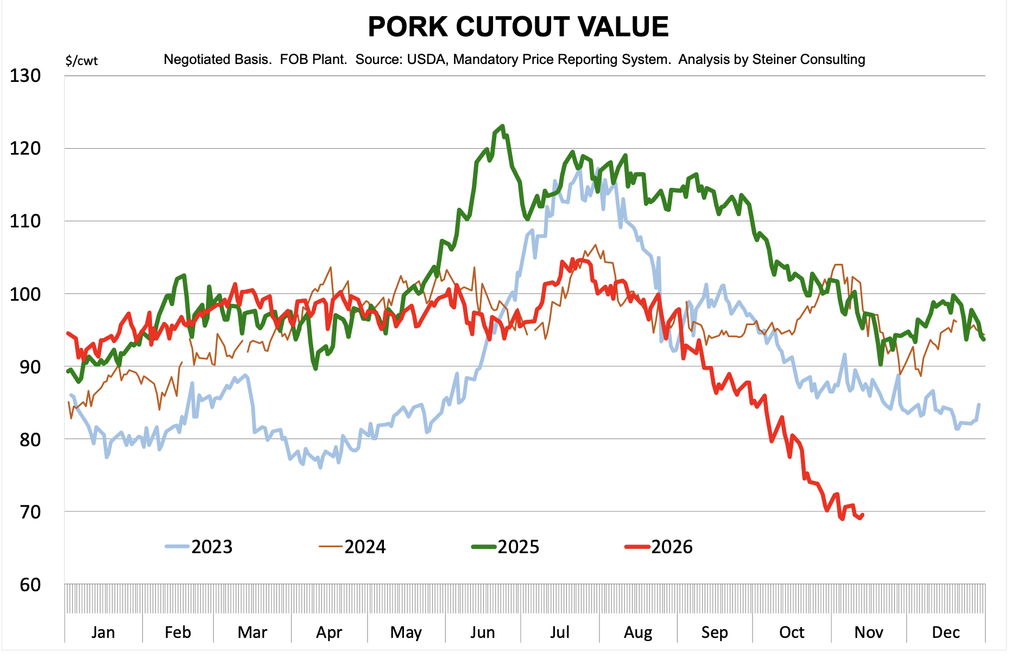
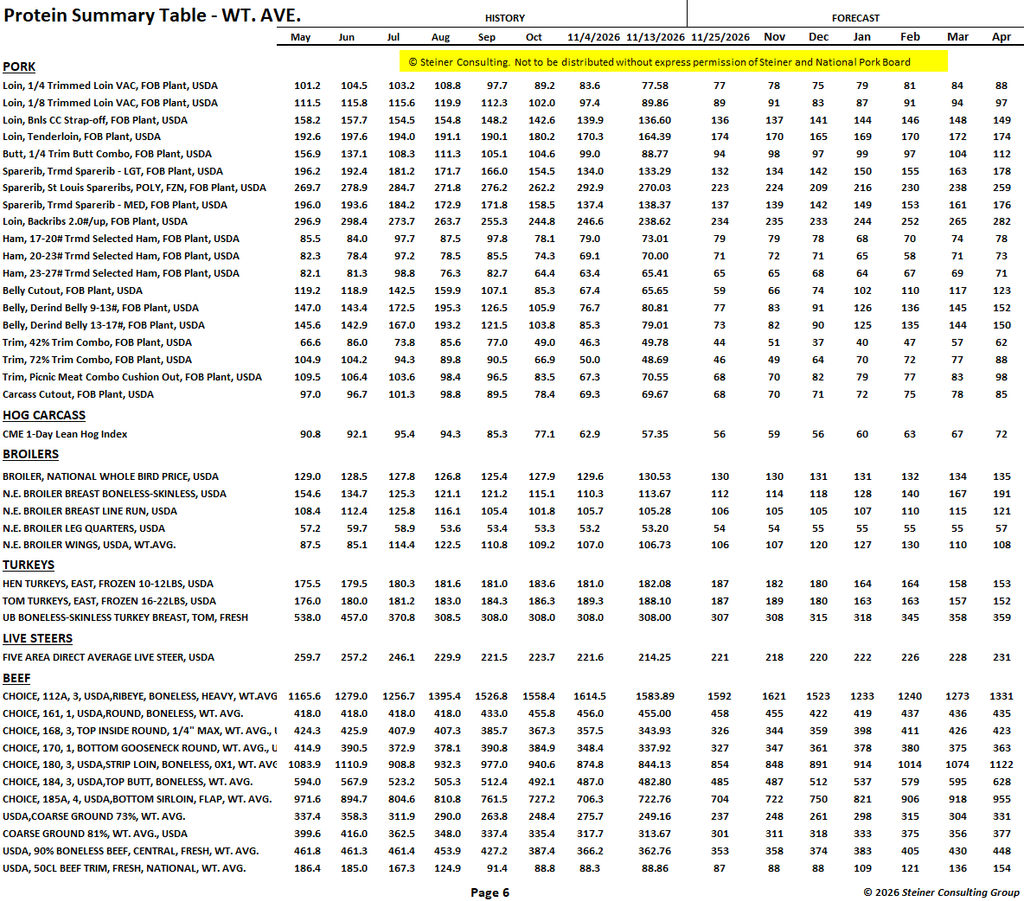
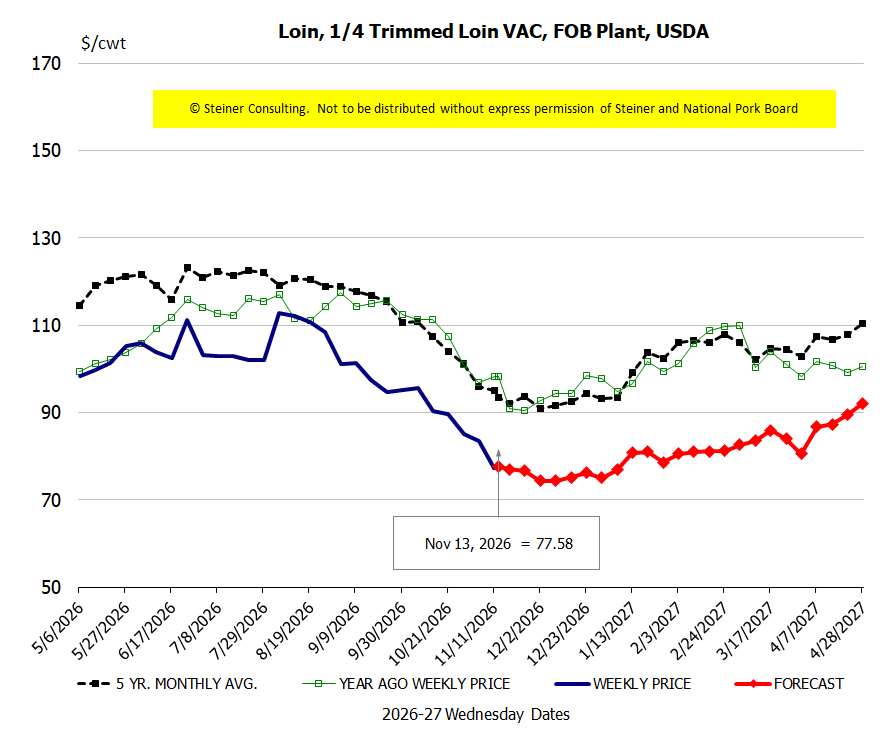
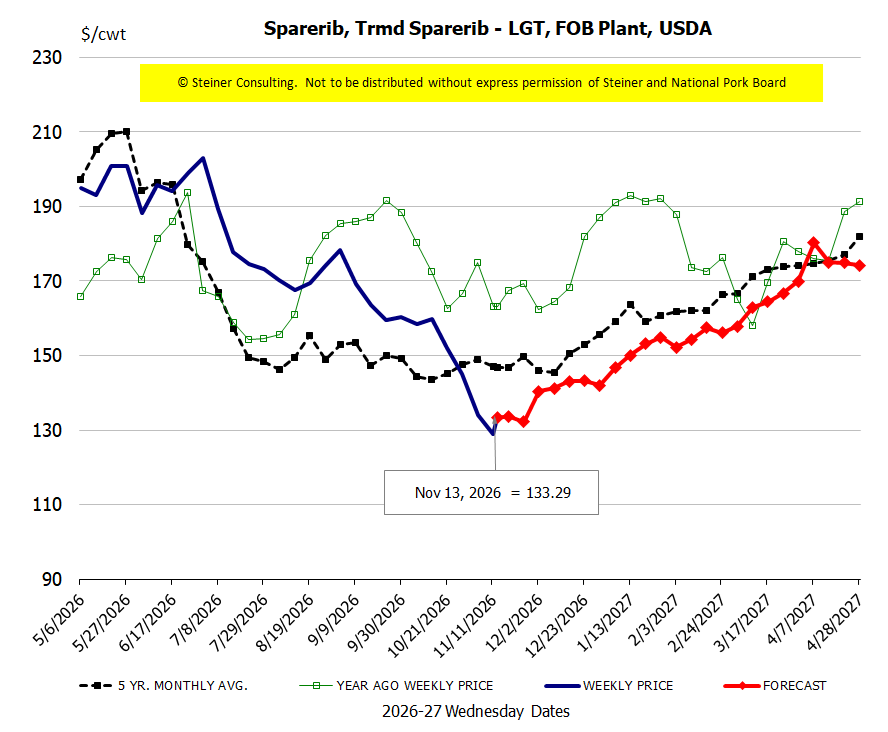
Pork cutout: In mid-October it appeared that the pork cutout might have found a bottom. Ater all, the previous year prices rebounded in Nov/Dec and even in 2023, a pretty dismal year for producers, the cutout was rather stable in November before losing more ground once holiday needs were covered. But the mid-October lull was a false bottom and prices have lost more ground. The upside appears limited in the very near term. Even as ham values may see a modest improvement thanks to late orders for Christmas, usually that comes to an end by early December. As for bellies, current prices may encourage some inventory building. But if demand is what ails the belly market, then building inventories this early may limit the upside in Feb/Mar.
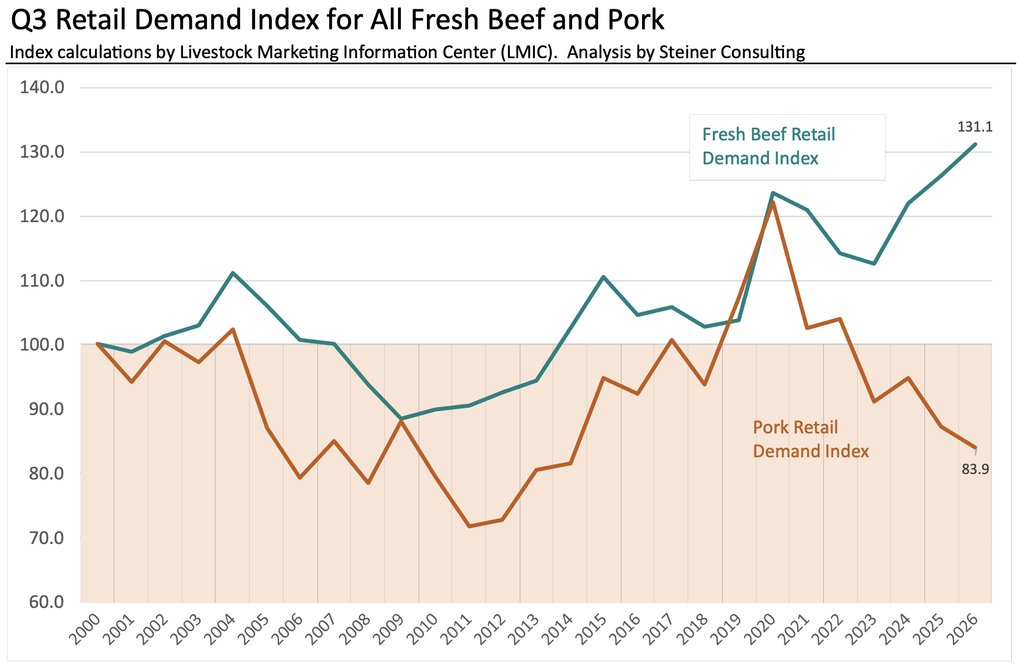
Retail fresh pork business remains sluggish. Unlike beef, which has seen a resurgence in demand at retail, retail pork demand has been trending lower. In Q3, the demand index for beef was up 3.8% compared to a year ago while the pork index was down 3.9%. Since 2019 (pre-COVID), beef demand index is up 26.5% while pork is down 21.8% (see chart). There is currently plenty of talk/speculation in the market about the widening spread between retail and wholesale pork prices. Invariably the discussion is whether lower pork prices at retail will be needed to move supply. As the chart to the right shows, indeed there is a wider gap between retail and foodservice but that has been the case of much of the last 8-10 years. Indeed, if we look at the 12 month moving average (darker shaded lines in the chart), the trend has been relatively steady for both wholesale and retail. Should wholesale prices continue to move lower, however, we would expect retail prices to start trending lower. The key takeaway, however, is not so much that there is a wider spread. Pork prices at retail have been stable for the last four years and well below other proteins. Affordability does not appear to be the issue for pork. And for retailers, the challenge is not so much about lowering overall prices but whether lower prices may fail to bolster sales and negatively impact revenue targets.
Our expectation is that prices will remain sluggish to start 2027, reflecting both seasonal factors and increased competition at retail from other proteins, especially chicken. We expect some recovery in Q2 as spring demand kicks into gear. Foodservice demand remains uncertain and so is export demand, especially with the increased competition from Brazil in Asian markets and supply recovery in Mexico lower through Q1. The expectation is that aggressive pricing will eventually get packers cleaned up. What is less clear is whether there has been a more persistent shift in demand, one that would require further supply adjustments on the part of producers.
Price Chart
Forecasts
Steiner Consulting Group produces the National Pork Board newsletter based on information we believe is accurate and reliable. However, neither NPB nor Steiner and Company warrants or guarantees the accuracy of or accepts any liability for the data, opinions or recommendations expressed.


