Steiner and Company produces the Profit Maximizer report on behalf of National Pork Board based on information we believe is accurate and reliable. However neither NPB nor Steiner and Company warrants or guarantees the accuracy of or accepts any liability for the data, opinions or recommendations expressed.
Highlights
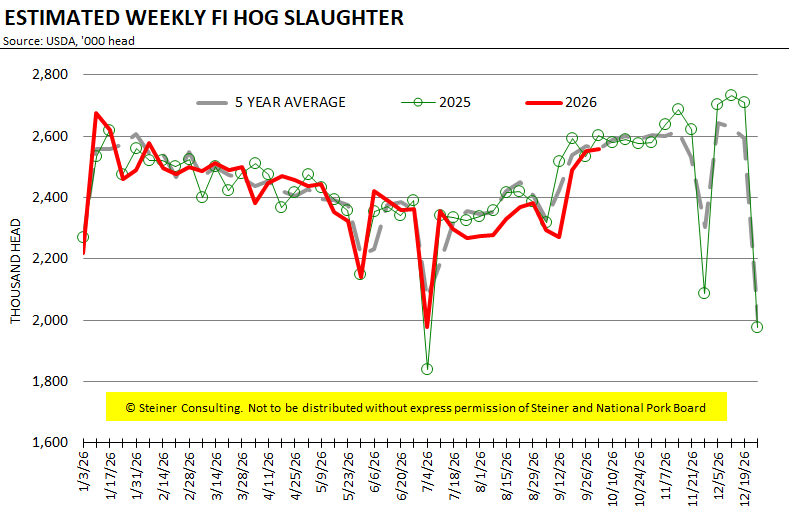
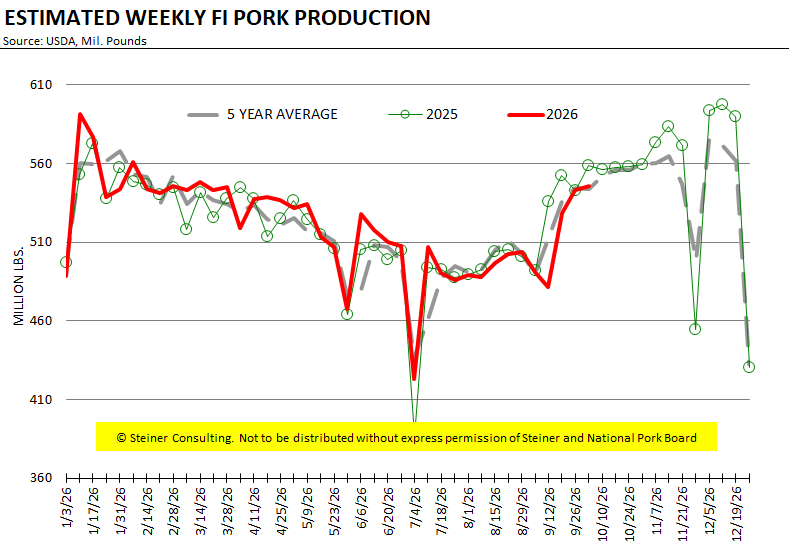
- Hog slaughter is expected to run about 1.5% below year ago levels through fall/winter. Higher feed costs and poor margins are likely to encourage producers to market hogs more aggressively, thus keeping weights at or below year ago levels.
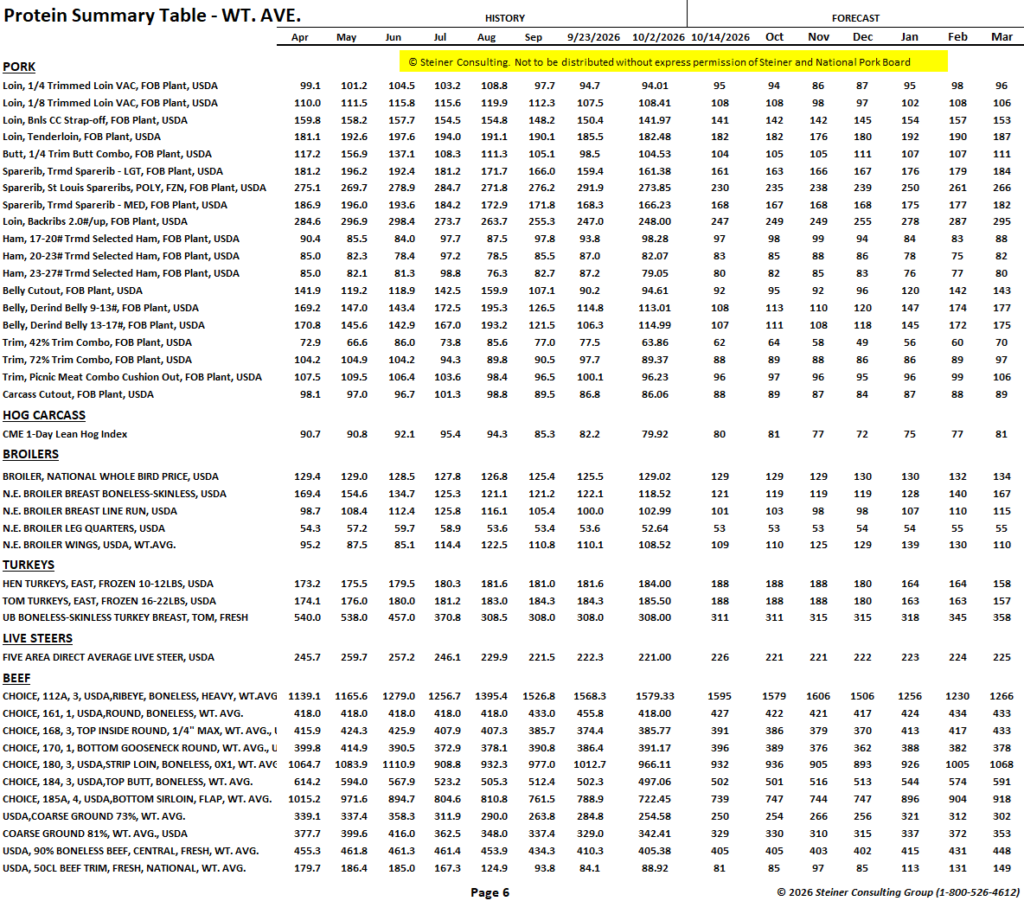
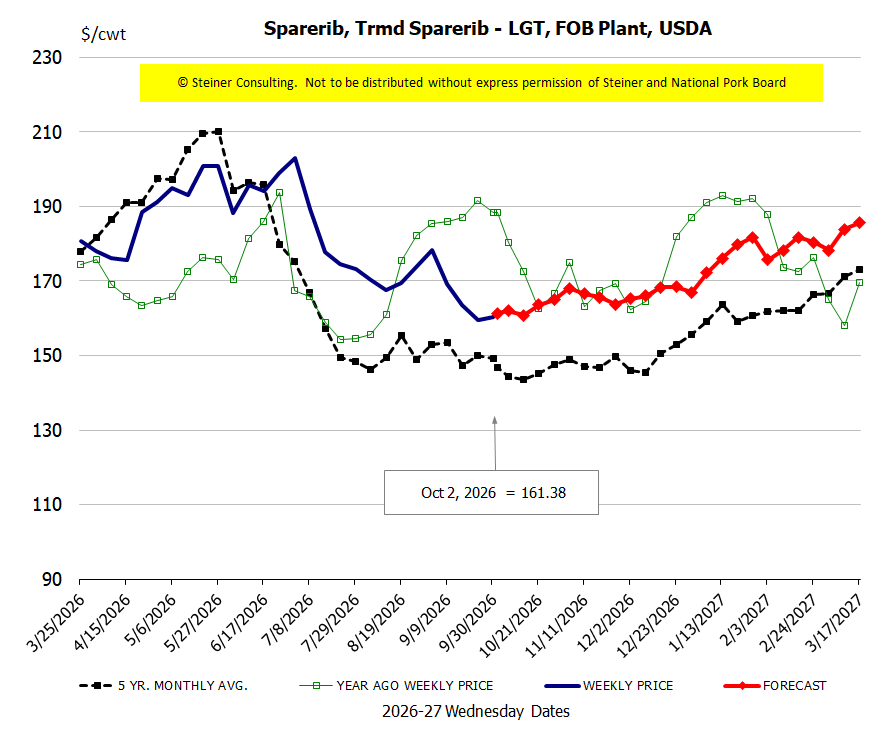
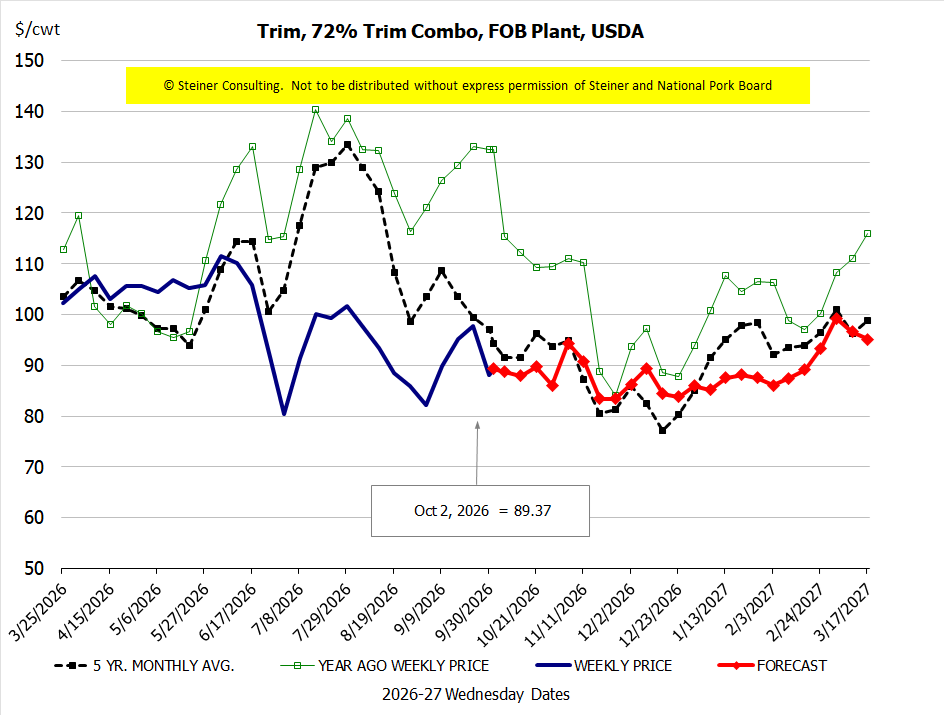
- In the near-term demand remains the main headwind for the pork market, be this retail, foodservice or exports. Expectations are for prices to remain under pressure given current demand environment and seasonal uptick in supply.
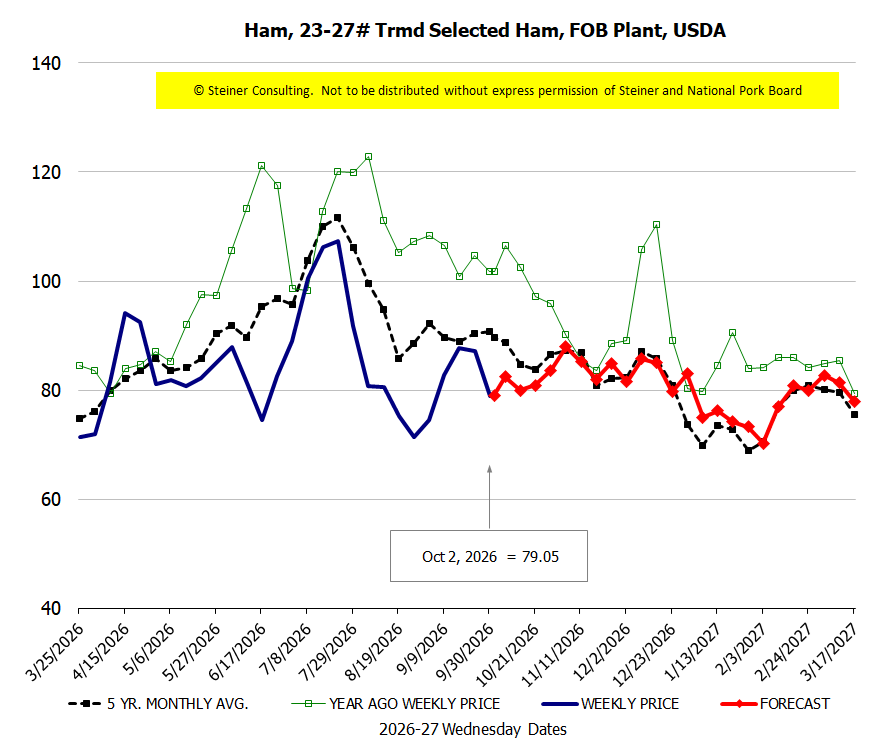
- Ham prices remain volatile. Sales to Mexico in September helped bolster prices briefly in the last two weeks but market remains well supplied and this is expected to keep prices in check.
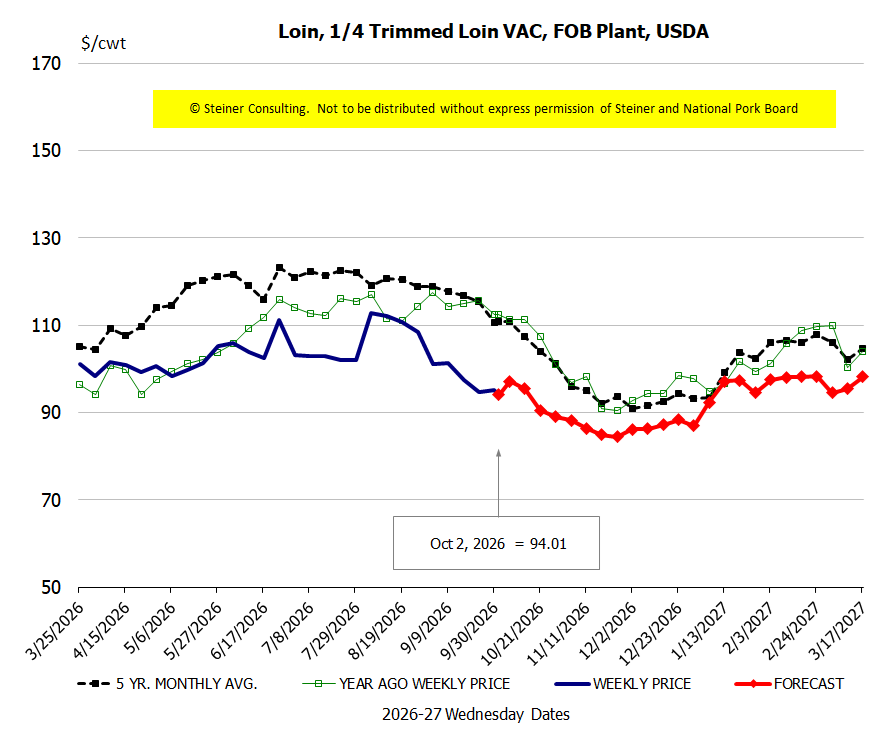
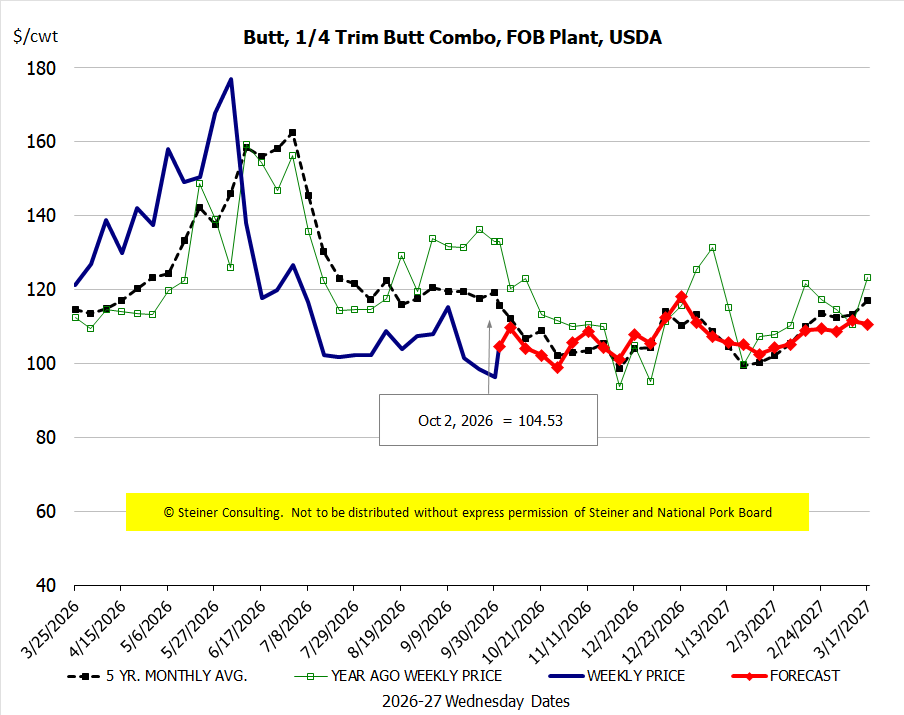
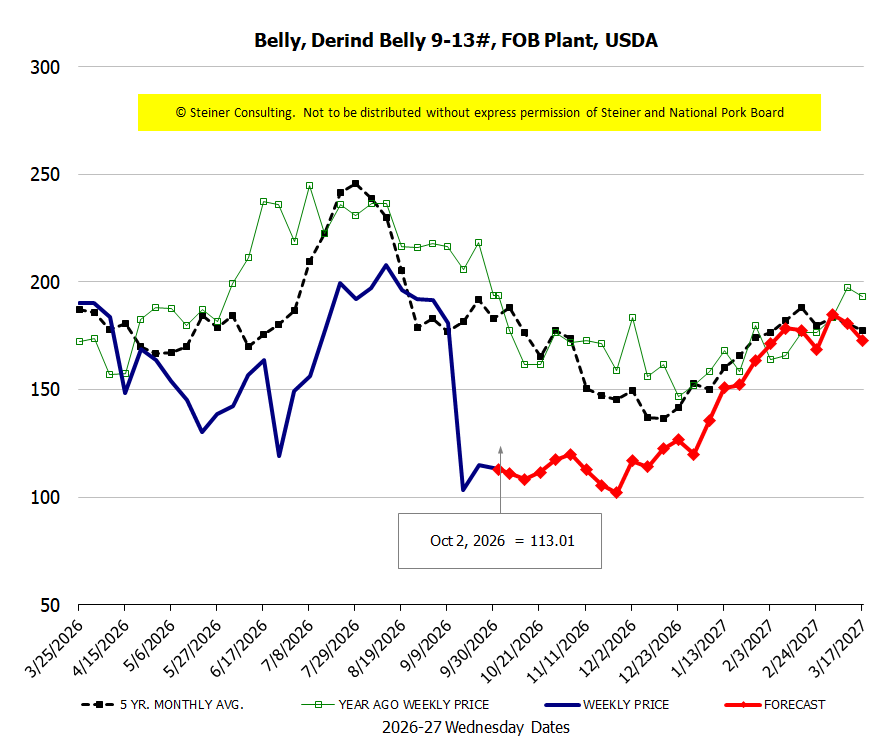
- Fresh pork prices are trending lower. Loins and butts usually move lower in the fall as supply increases. Slowdown in retail sales is expected to keep prices on the defensive in Q4.
Full Report
The results of the quarterly USDA ‘Hogs and Pigs’ survey came in lower than expected but we cannot say that they are particularly surprising. Prior to the report, analysts were thinking that the inventory of market hogs this fall and coming winter would be only slightly lower than a year ago. That expectation was likely based on the results of the June survey, which pegged the March – May pig crop at about the same level as the previous year. However, there was plenty of evidence that the June survey likely overestimated the supply on the ground, evidenced by the lower slaughter numbers this summer.
According to the latest survey, hog slaughter this fall and coming winter should be down around 1.5% vs. a year ago. Note that USDA did not make a significant downward revision to its Mar-May pig crop but that will likely come once actual slaughter is tabulated. Weekly hog slaughter is down 3.2% y/y since the first week of September, confirming the outlook for lower hog numbers in the near term.
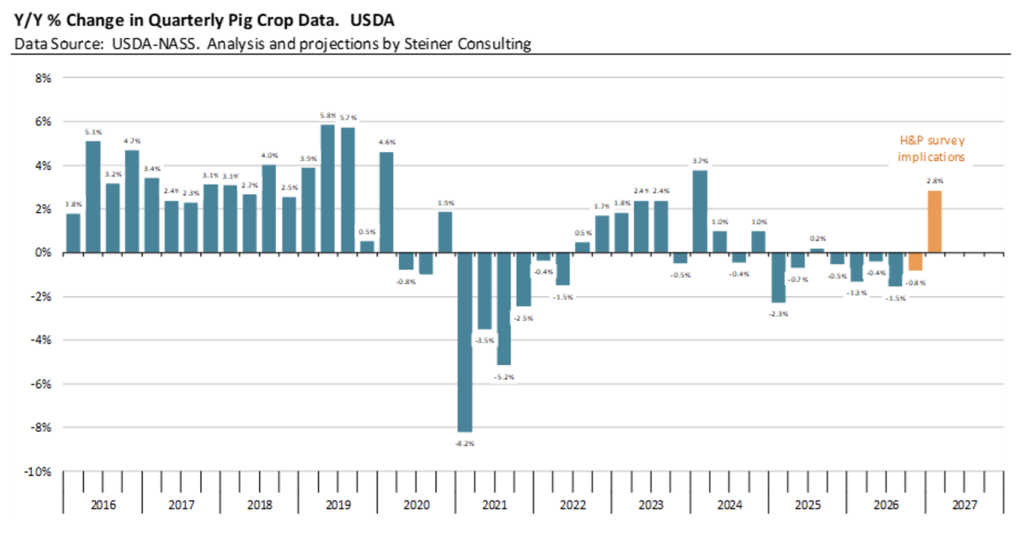
The Jun-Aug pig crop was estimated at 34.508 million, 1.5% lower than a year ago, in agreement with the market hog figures implying a similar decline for slaughter during Dec-Feb period. As for next spring, hog numbers are expected to remain limited given a farrowing estimate for Sep-Nov down 1.8% y/y. Even with more pigs per litter, supply next spring is unlikely to increase.
Could we see an improvement in the supply picture by late spring and summer of 2027? The survey appears to suggest so, with farrowing estimates for the Dec-Feb period up 2.1% vs. a year ago. Couple that with a trend increase in pigs per litter and the survey suggests a potential 3% increase in the pig crop this winter. There is an economic rationale for breeding more sows/gilt this fall and thus get a higher farrowing rate in the winter. Producers have struggled with supply during the summer months in both 2025 and 2026. Disease pressures and weather have been primary factors working against them. Looking at the futures strip for next year, only June, July and August offer producers a positive margin.
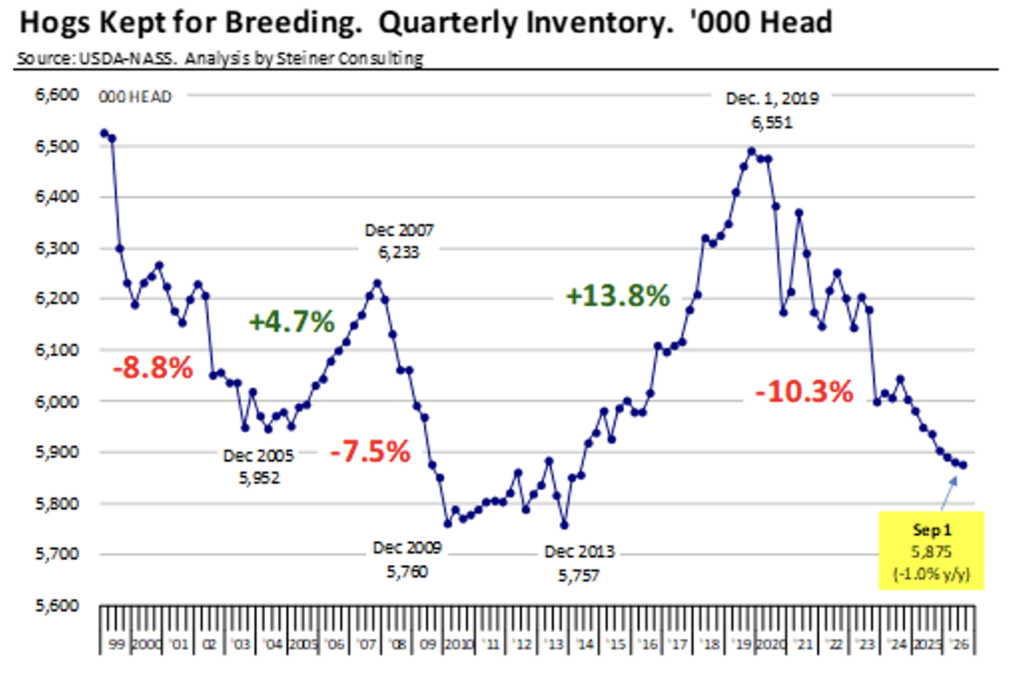
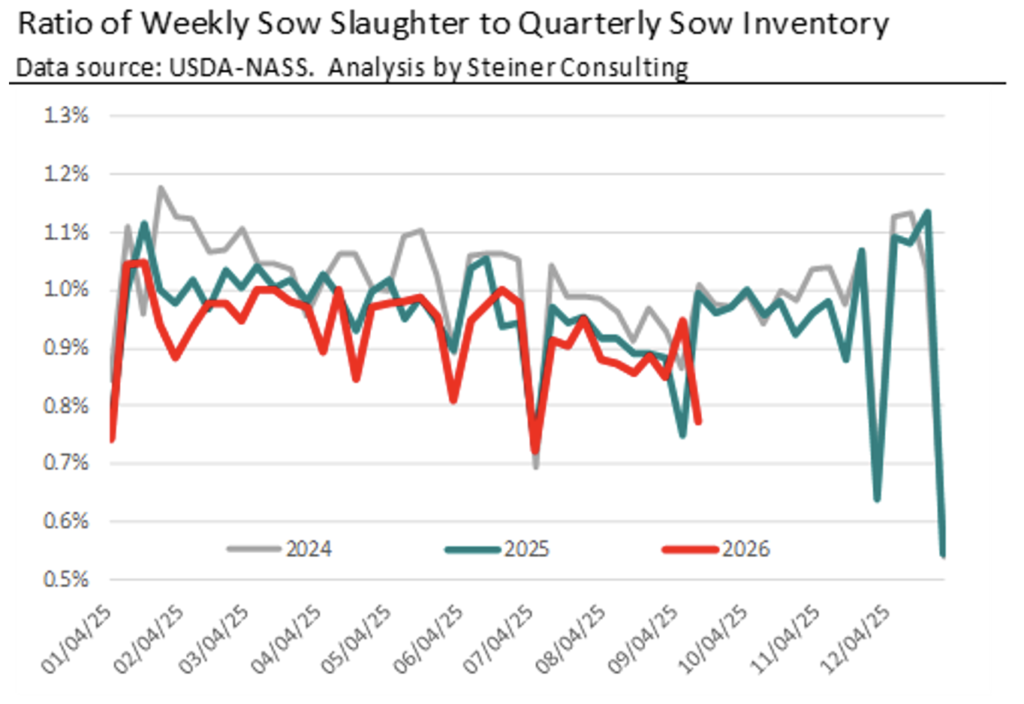
It stands to reason that producers would want to produce more pigs that will be marketed during that period. But is that realistic, especially as the breeding herd on September 1 was 1% lower than a year ago? The answer is yes but several things would need to go right. One way to help bolster farrowing for Dec-Feb would be to reduce the culling rate and keep some sows through another farrowing cycle. The culling rate has been lower than a year ago this year and it will be interesting to see how that develops in Oct/Nov. Producers could potentially retain more gilts although we think that is less likely as uncertainty about future demand and high feed costs will make producers more cautious about making that investment. Farrowings for Sep-Nov were down 2%, likely suggesting that producers may have shifted some of the breeding schedules in response to price signals.
Our current working thesis is that producers will continue to keep a lid on production given the persistent weakness in both domestic and export markets. Lower pig crops this summer and fall, however, increase the upside price risk for late winter and spring. February and April are particularly vulnerable especially if current low prices encourage large foodservice chains to enter into more fixed contracts for products such as bellies, products that have so far struggled to gain traction but offer very good value.
Pork Demand Wild Card
Demand has been sluggish for the last six months, and the outlook is uncertain. Several factors currently being blamed for the weakness – lower chicken prices, tight consumer budgets, changes to SNAP benefits and the growing use of GLP-1 meds – are unlikely to disappear next year. Exports have also struggled due to strong competition from the EU and Brazil. At the same time, one could argue there is also upside. Stronger economic growth would improve both domestic and export sales, while higher feed costs could constrain chicken production growth in 2027, making pork more competitive, especially during spring and summer.
The bottom line is that in the near term hog supplies are tighter than previously expected, presenting more upside price risk into late winter and spring. Producers are saying they expect supply to increase by summer 2027, but that would mean producers ignoring all the demand weakness and pushing to get more farrowings from a smaller herd. The assumption in our forecasts is that supply growth will remain constrained while low prices help push more pork into foodservice and export channels.
Price Chart
Forecasts
Steiner Consulting Group produces the National Pork Board newsletter based on information we believe is accurate and reliable. However, neither NPB nor Steiner and Company warrants or guarantees the accuracy of or accepts any liability for the data, opinions or recommendations expressed.


