Steiner and Company produces the Profit Maximizer report on behalf of National Pork Board based on information we believe is accurate and reliable. However neither NPB nor Steiner and Company warrants or guarantees the accuracy of or accepts any liability for the data, opinions or recommendations expressed.
Highlights
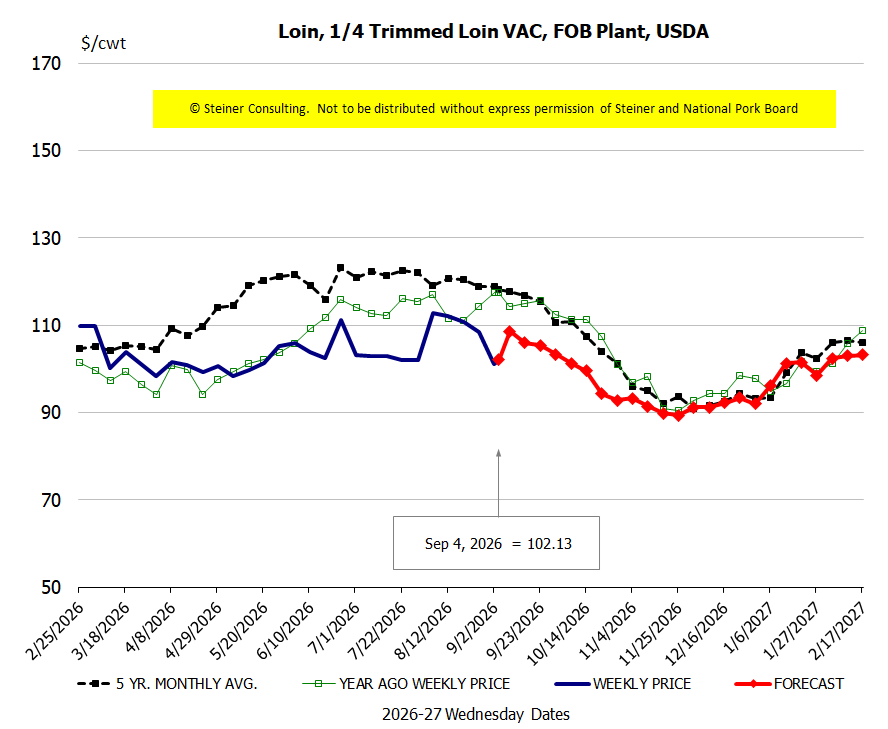
- The long holiday weekend impacted spot market trade towards the end of the week and contributed to the sharp price declines across several products. Slaughter days are far more critical for pork than beef and long holiday weekend significantly impact scheduling and production plans. As a result, the pork cutout by the end of the week was 6% lower than where it started.
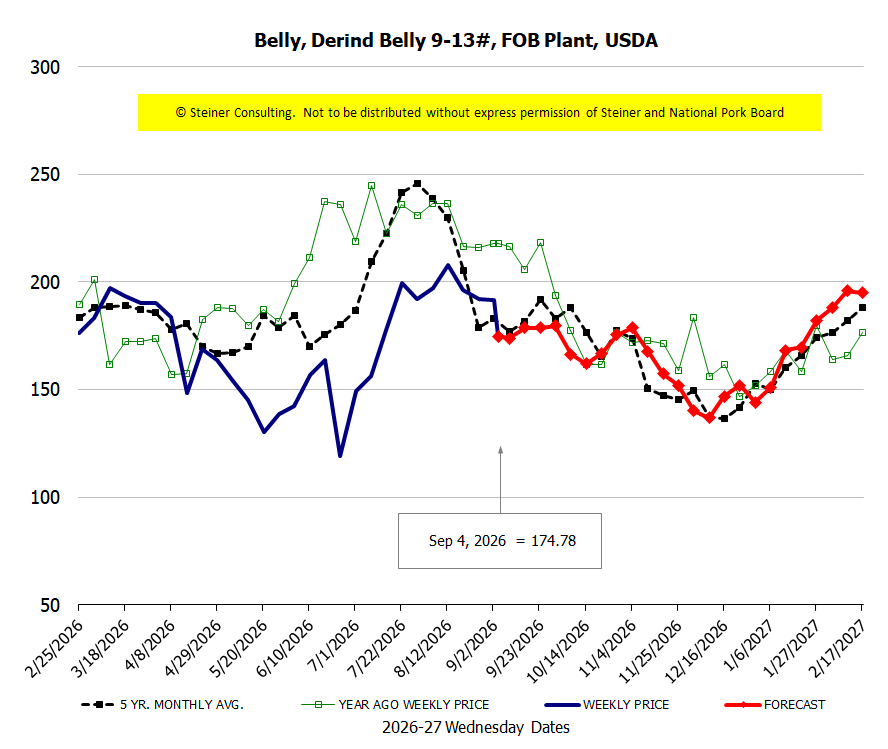
- Belly primal value dropped 25% in just a few days, largely accounting for the decline in the value of the cutout. While prices may see a modest rebound once plants return to full production schedules, it is not unusual for belly prices to drift lower after Labor Day.
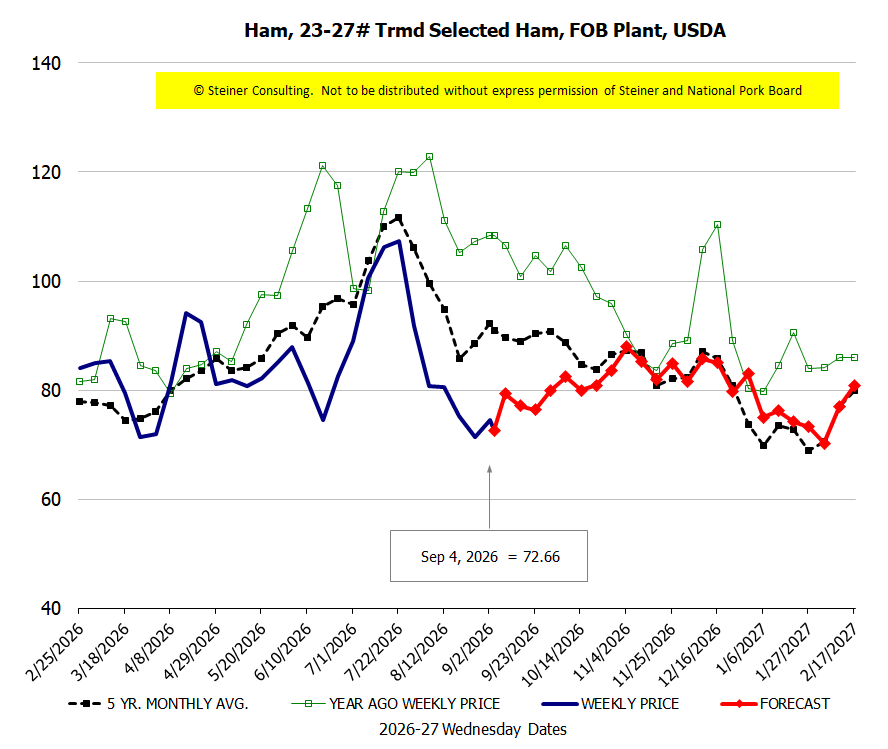
- More critical for the cutout in Sep/Oct will be the value of hams and picnics, two items that have struggled to gain traction, partly due to export weakness. Currently they are 25-30% below 2025.
Full Report
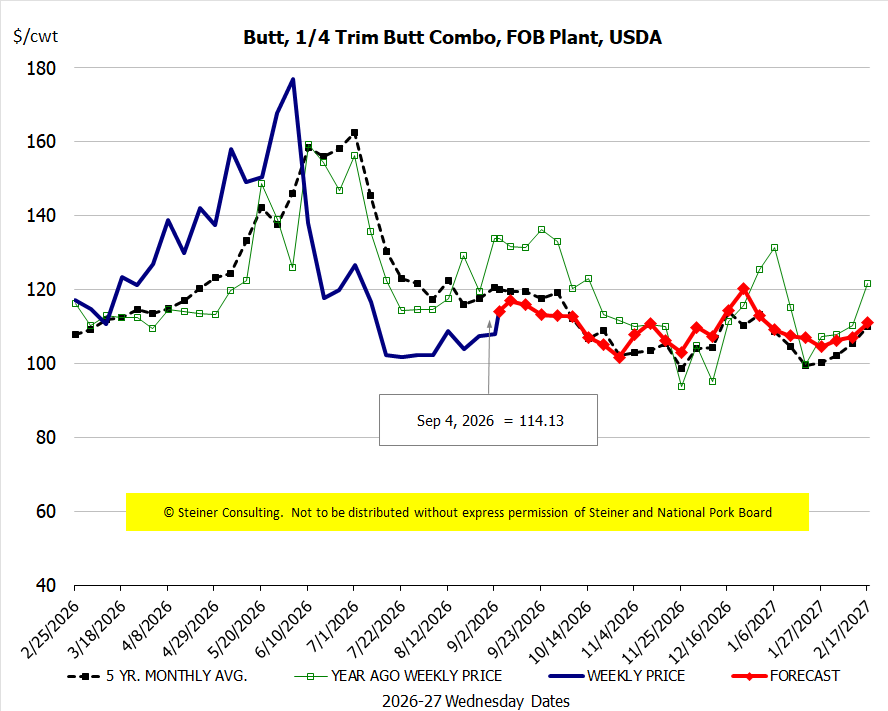
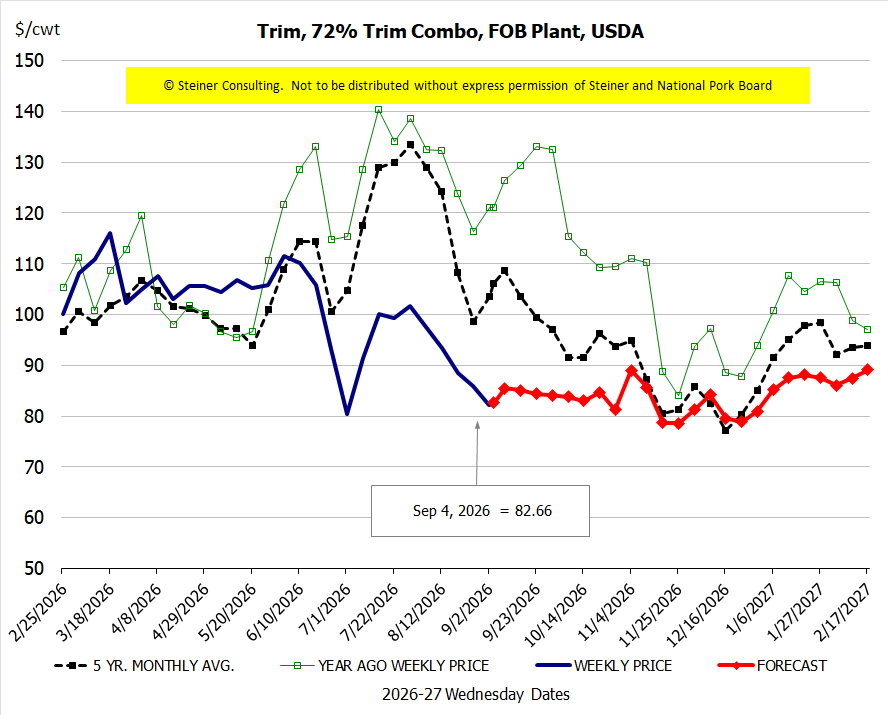
Pork prices have underperformed our forecast this summer and this is primarily due to particularly weak demand for processing items, especially items that also have significant exposure to export demand. Almost half of the hams and picnics produced in the US go to export channels. Global demand has struggled to gain traction, in part because of the slowdown in demand in China and oversupply. Other Asian markets have also performed poorly. As a result, large exporters such as EU, Brazil and USA are competing fiercely for orders, lowering prices in the process. Hog prices among the major exporting and importing countries are down 20-45% vs. a year ago. The price decline is particularly evident in the EU, as African Swine Fever outbreaks have closed some export channels and resulted in a glut of product within the EU market. But exports only go so far in explaining the weakness in the pork market this summer. High ground beef prices were expected to provide some support for fresh pork, especially items like pork loins and butts. That did not happen. Instead, the glut of chicken we think had a particularly negative impact.
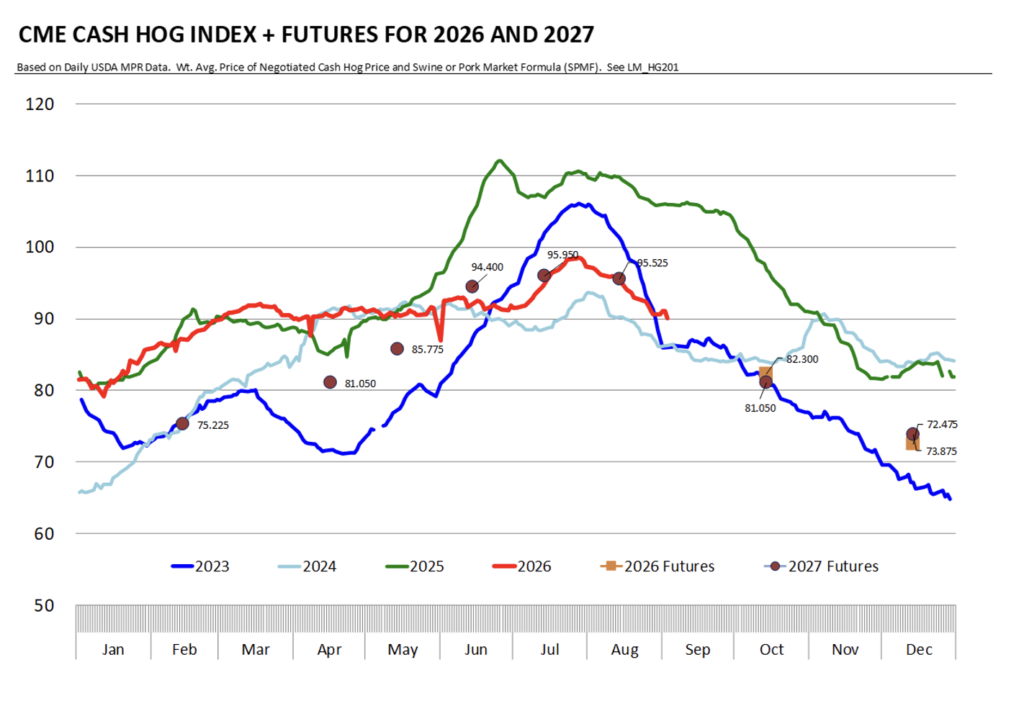
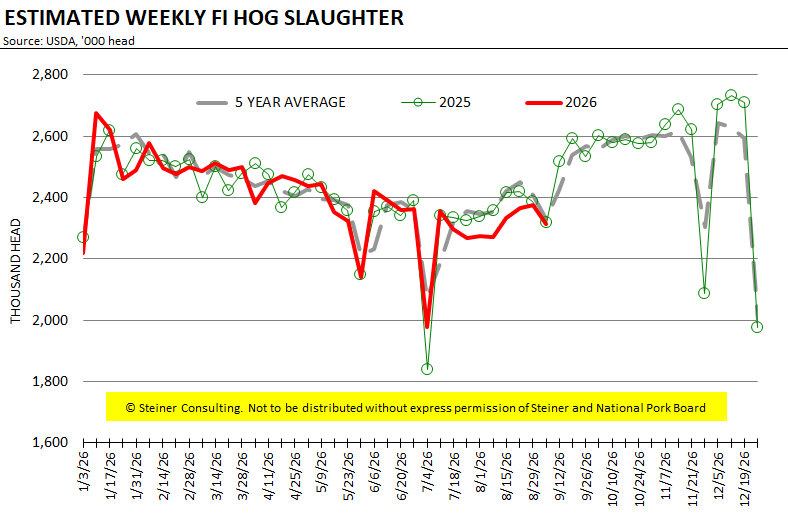
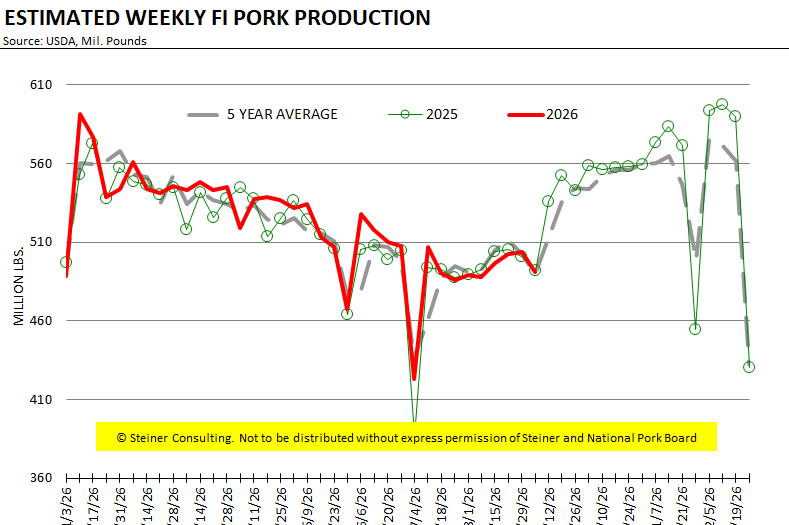
The combination of weak product pricing and higher feed costs will continue to limit pork supply in the near to medium term. The hog breeding herd on June 1 was 1.2% lower than a year ago. This is expected to result in a lower pig crop not only during Jun-Aug but also Sep-Nov. Indeed, pork supplies during winter/spring of 2027 are expected to be near previous year and we think the supply risk is skewed to the downside. Higher feed costs now imply breakevens in the mid 90s compared to the low 80s just three months ago. Our forecast is for hog slaughter to be slightly lower in 2027. Per capita availability was marginally higher this year but it now expected to decline 1.7% in 2027 and expected to be the lowest in more than a decade. Our current forecast is for US pork exports in 2027 to post only a 2.2% increase. However, if EU production continues to contract, there should be more opportunities for US pork in 2027. Much, however, will depend on the state of demand in Asia and pork production/prices in Mexico, which now takes over 40% of all US pork exports.
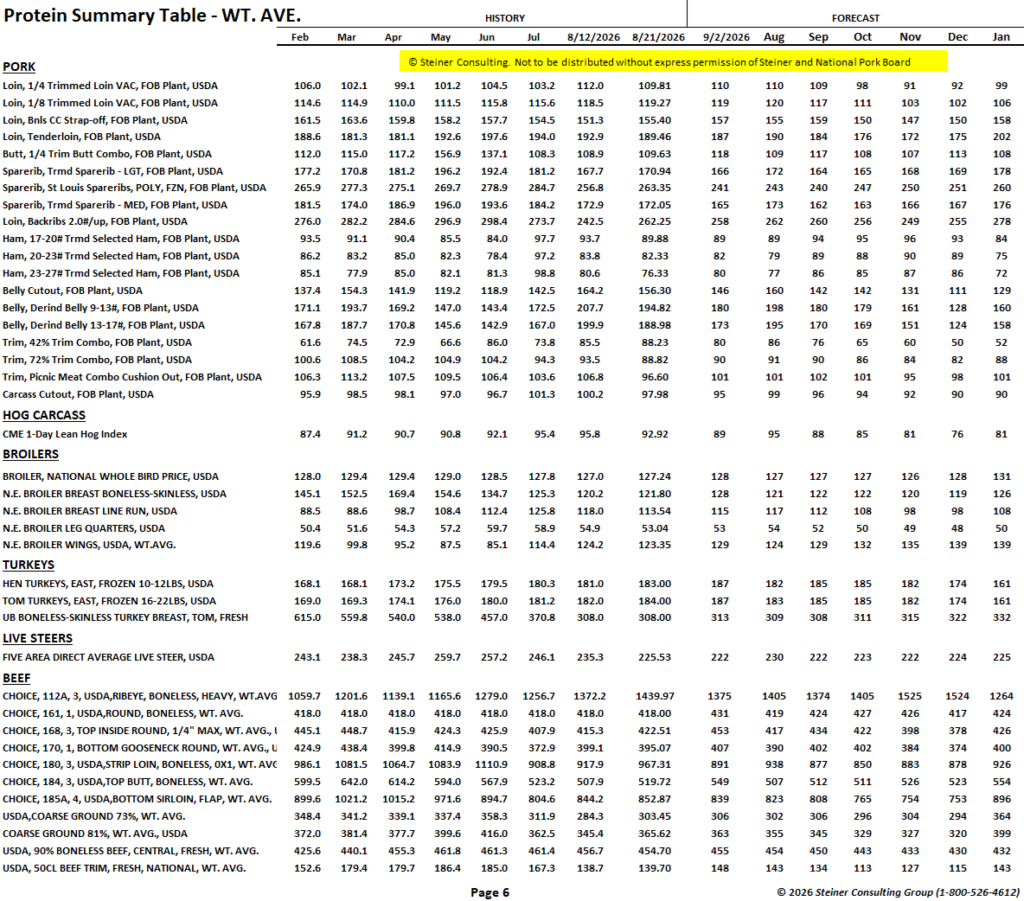
Price outlook: At the start of the year our hog forecasts for 2026 were in the mid 90s. That forecast was revised to the high 80s in our spring update and we continue to project the average price for the year at $88, about $1 lower than what we projected in June. The cutout Forecast has been revised lower from $98/cwt in June to $96/cwt currently. We have not made significant revisions to the cutout forecast for 2027, which is currently projected at $97.5/cwt, 1.4% higher than in 2026 while the hog forecast at $87/cwt is expected to be down 1.5%.
Pork Cutout Trend Going into the Fall
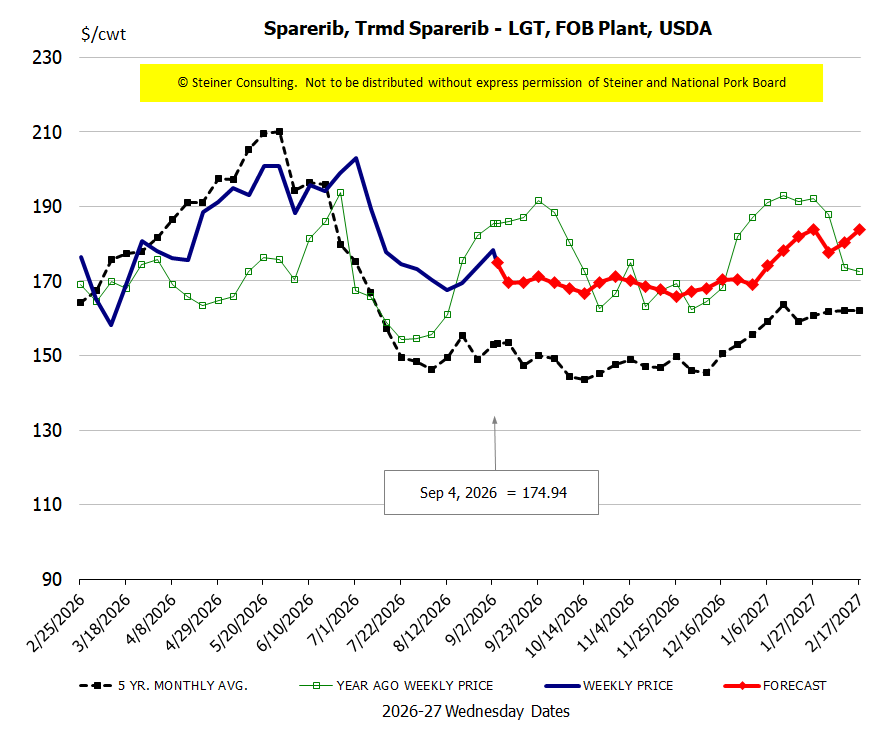
The last big holiday weekend of the spring and summer is now behind us and, as is usually the case, resulted in a fair amount of volatility and noise in the product market. The pork cutout on Thursday was quoted as low as $91.1/cwt and on Friday it was $92.9/cwt, a 6% decline compared to where the pork cutout was trading at the start of the week. The drop in the cutout value last week was mostly due to lower belly prices, which were as high as $162.8/cwt to start the week but by Thursday printed at $121.9/cwt, a 25% decline. This was not a supply issue. Slaughter for the week was 2.287 million head, 90,000 head less than the week before and 1.3% lower than the previous year. Rather, it simply shows the impact that reduced processing schedules combined with inventory drawdowns can have on daily pricing ahead of long holiday weekends. We would not be surprised if prices bounce this week as processors return to full production schedules. Still, the normal seasonal pattern is for belly prices to move lower after Labor Day.
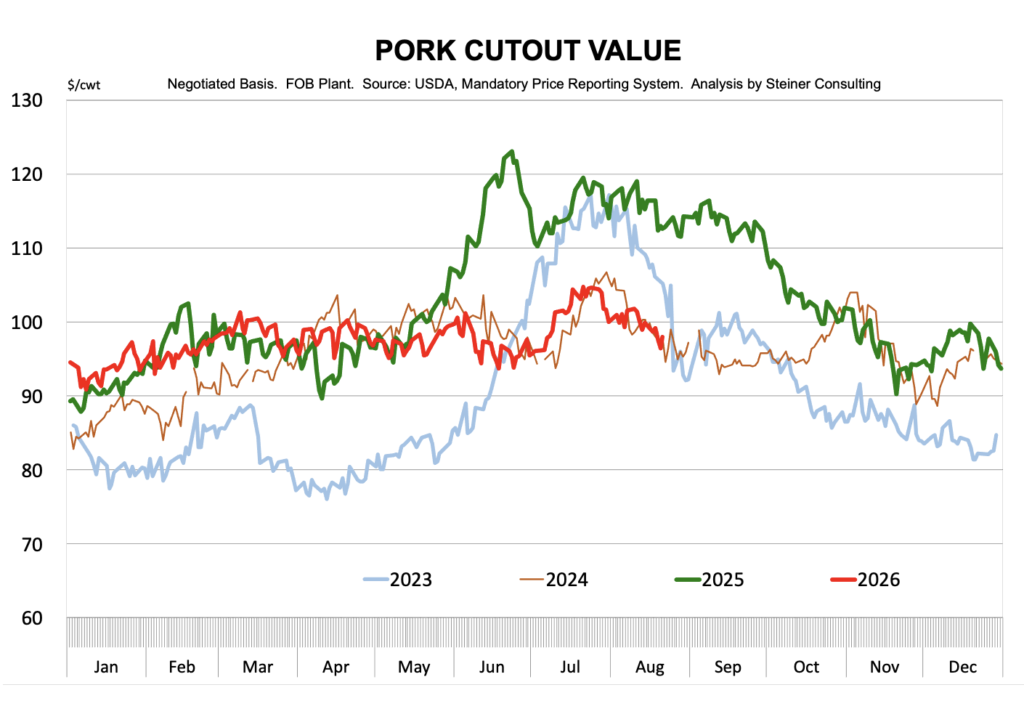
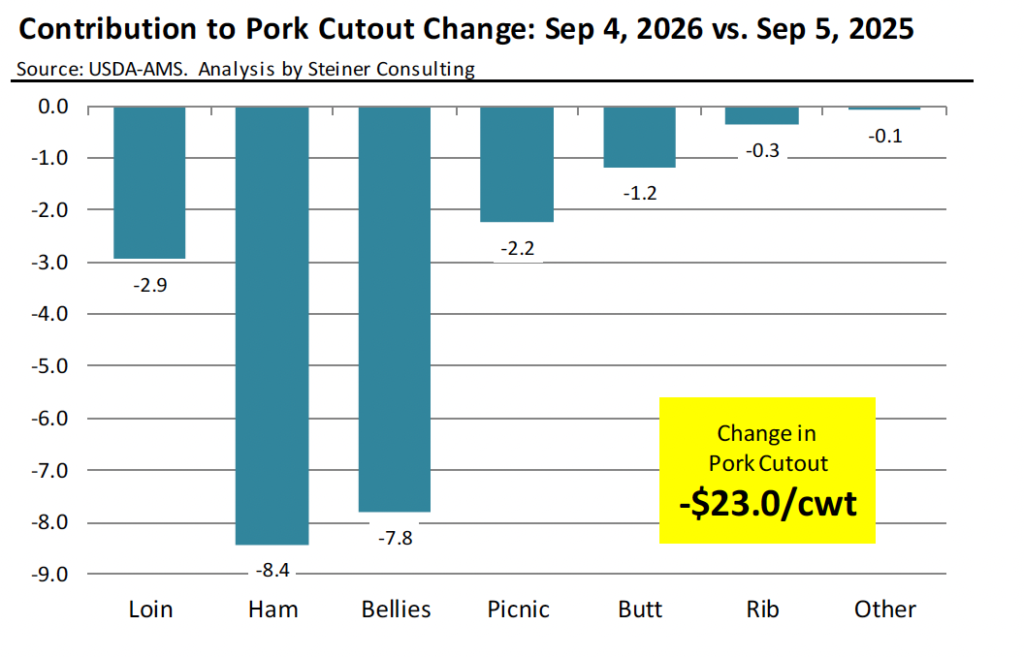
More important for the cutout, and something we expect to discuss more in the coming weeks, is the outlook for hams. So far, ham prices have far underperformed earlier expectations and have been a big drag on the cutout. The pork cutout on Friday was $23/cwt (-20%) lower than a year ago and more than a third of the decline was due to the lower value of the ham primal. Holiday demand, high turkey prices and current very attractive ham prices should incentivize retailers to feature hams more prominently this fall. But persistent weakness in the world market is a major concern and critical for hog futures this fall.
Price Chart
Forecasts
Steiner Consulting Group produces the National Pork Board newsletter based on information we believe is accurate and reliable. However, neither NPB nor Steiner and Company warrants or guarantees the accuracy of or accepts any liability for the data, opinions or recommendations expressed.


