It’s no secret that meat is having a moment. On a recent podcast interview with me and Jennifer Shike at Farm Journal, Kansas State University ag economist Glynn Tonsor shared this stat:
In 2025, the average U.S. resident consumed 29 more pounds of meat than they did 15 years ago.
People are already increasing their meat consumption. For pork producers, the question is, how do we increase the amount of that meat that is pork?
Like any goal, we need two core elements for success:
1) Clarity on the target
2) Belief that it’s possible
I believe we can increase the long-term value of pork – and deliver real value to producers by improving both the value and volume of pork consumption.
Why? Because the growth opportunity of adding even one more pound of consumption per person in the U.S. is significant. Not through discounts or deals. But through increasing consumers’ desire and demand for our product.
Based on rough math of the U.S. population times one more pound and multiplied by the average market price of fresh pork, one more pound of pork equates to more than $1.5 billion in incremental retail value – that’s value on top of the current consumption level.
I often tell my kids that when I was young, we didn’t use the word “billion” with a “b” very often. Yet, today, more than a billion dollars in incremental value could be realized with just one more pound of consumption.
But why should we, as pork producers, believe “one more pound” is possible? And if it’s possible, how do we get there?
We’re Relentless Pursuing the Consumer – and They Like Us
Through a combination of consumer and market research and strategy-driven marketing activities, we understand where we’re winning and where we have opportunity. While younger generations like Gen Z and Millennials currently eat less fresh pork, they love the flavor of bacon, sausage, pepperoni and charcuterie meats. Our opportunity now is to introduce them to the full product portfolio, but in a way that aligns with how they eat and the cuisine they crave.
This is a double-edged opportunity – in a good way. Offering and innovating pork options that work in air fryers, or new approaches to old favorites like the Boston Butt Burger, highlighting popular dishes like pork katsu (aka tonkatsu), and evaluating new carcass cuts like the Coppa create opportunities for increased carcass utilization and value, too.
We can make pork more relevant to the younger consumer and improve the value of the whole hog. Talk about a win-win.
Data and Intelligence Continue to Change the Game
As farmers rely on data to make production and business decisions, the National Pork Board’s efforts to increase demand and drive value start and end with business intelligence. We ground our strategy in what we know about consumers and the market, but then we analyze, measure and monitor to make changes, improve and ensure we’re good stewards of your Checkoff dollars.
Take the current success of ground pork in the marketplace as an example. Five years ago, market research indicated an opportunity for group pork. The NPB team analyzed the data, shared it with supply chain partners, advocated for the grind to be placed near other grinds, and continued supporting retail as it worked to activate based on the insights. Today, data shows an $80 million opportunity with ground pork and growth already happening in the marketplace:
• Gen Z shoppers are spending more per trip on ground pork than any other generation
• Millennials and Gen Z are purchasing ground pork more frequently
• 90/10 ground pork has grown by 18 percent.
The Checkoff team also is using data and insights to help the supply chain, including retail, packers/processors, and food service, identify opportunities for pork products they haven’t seen before. Our core product innovation strategy is focusing on how consumers USE protein and then identifying how pork can deliver.
Demand and Production: You Can’t Have One Without the Other
While we are relentlessly pursuing our consumer, our team also knows that in-market success is only possible with on-farm progress. You can’t have one without the other.
A healthy herd and on-farm productivity must be balanced against increased consumer demand. Too many pigs with not enough demand means prices drop; too much demand without a reliable supply creates unrealized opportunity. And in the middle of that balance lies the industry’s longevity.
As someone who has been a part of the pork industry my whole life, I’m personally familiar with the peaks and valleys of the market. Between 2016 and 2025, economic data shows producers realized profit in only 60% of the months in that time span.
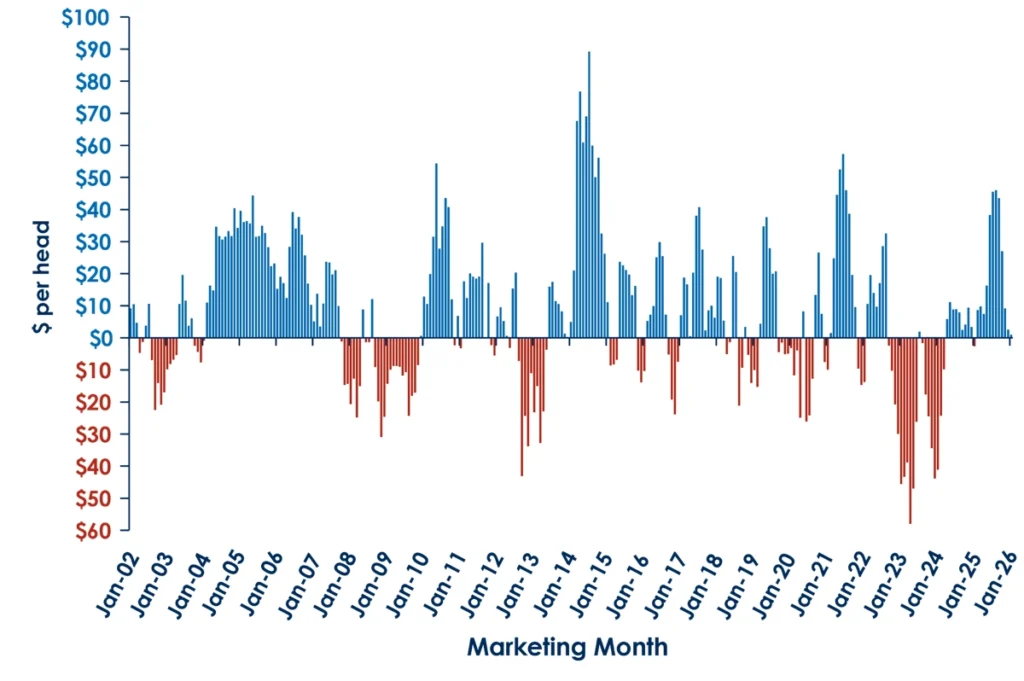
One More Pound represents one way to quantify the balance we need to decrease the intensity of the valleys. It gives us a vision for the next step that moves us closer to the long-term value and consumer-driven demand that can invigorate the industry.
The Next Generation of Pork Relies on the Next Generation of Consumers
I’m passionate about the future of the pork industry – not only from a professional perspective but also a personal one. I want to pass along the opportunity for my kids and grandkids to continue our family’s work in pork. But that’s only possible if their peers – Gen Z, Gen Alpha and beyond – purchase and consume our product. Building relevance for our product now creates a pathway for a bright future on the farm and in the market.
Let’s start with a belief in One More Pound and a laser focus to deliver for producers today and tomorrow.


