Testing Animal Traceability Across the Supply Chain
A two-part pilot demonstrated how radio-frequency identification (RFID) and AgView® can help the pork industry track individual animals as they move through the cull sow market.
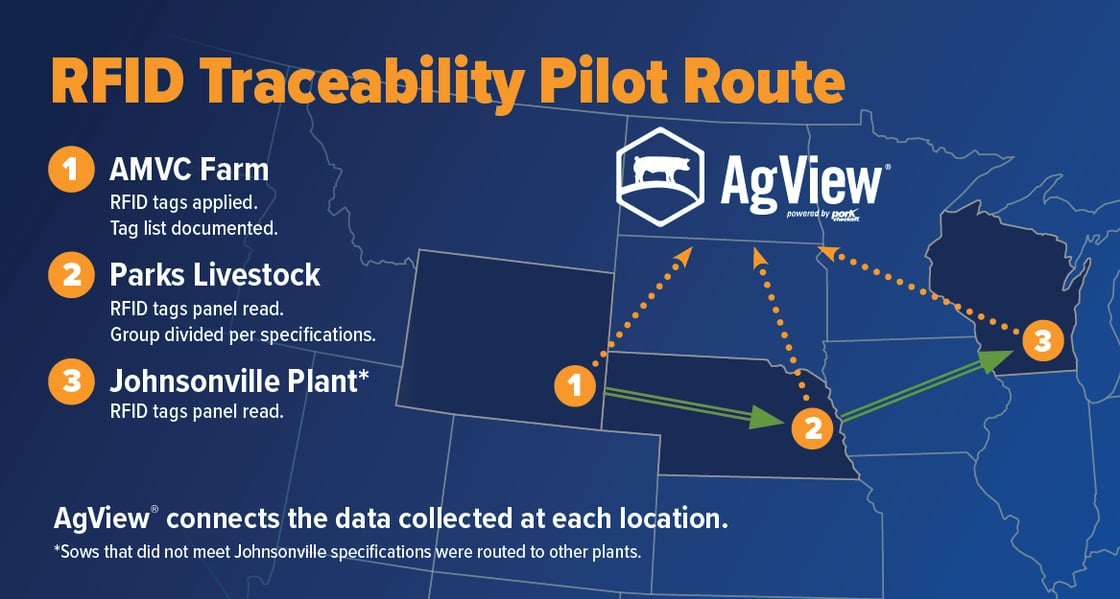
The pilot followed cull sows from an AMVC Management Services farm to a Parks Livestock buying station and then to a Johnsonville processing plant.
Parks operates multiple buying and sorting stations and currently has 11 locations equipped with panel reading technology. This pilot used its station in Fremont, Nebraska. Parks purchases cull sows from farms, sorts them into new groups and sells them to packers based on each plant’s purchasing specifications.
That means animals arriving at Parks in one shipment do not necessarily continue to the same packer. Some of the sows from AMVC met Johnsonville’s specifications, while others moved to different destinations.
Each sow received an RFID ear tag at the farm. Panel readers at the Fremont buying station and Johnsonville captured tag numbers as the animals moved through each location. The records were entered into the Merck Remote Inventory Portal. Once a user initiated the upload, the system’s connection to AgView® transferred the records into individual animal profiles and location histories.
The pilot team conducted the exercise twice, first in May 2026 and again in August after addressing issues identified during the first run.
The First Exercise Found Practical Gaps
During the May exercise, AMVC tagged 100 cull sows. For the pilot, AMVC also created a list of the exact tags used so the team could compare that list with the reads collected at each location. The panel reader at Parks Livestock successfully captured all 100 tags.
Parks sent 43 of those sows to Johnsonville. The remaining animals went to other destinations based on packer purchasing specifications.
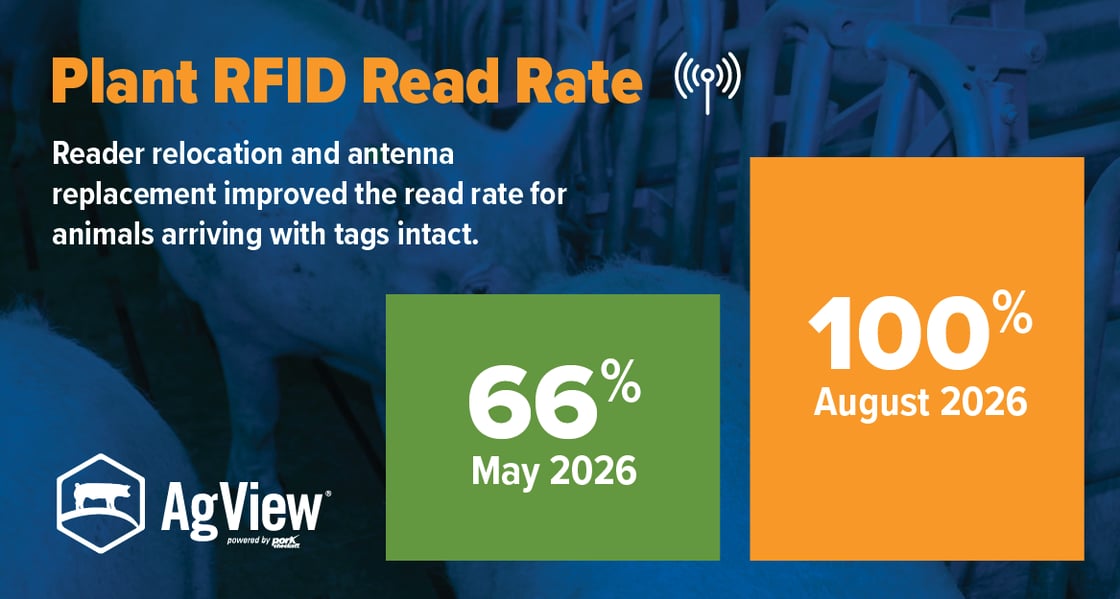
The Johnsonville reader captured data from 27 of the 41 tagged sows included in the calculation, a 66% read rate. The pilot team traced the missed reads to the placement of one reader and a defective antenna at the plant.
The exercise also uncovered a location-setting issue that affected the transfer of Parks Livestock’s records into AgView. These findings showed how equipment placement and system setup can affect RFID data capture.
Adjustments Led to a 100% Plant Read Rate
Before the August exercise, the team relocated the plant reader, replaced the defective antenna and corrected the location setting affecting the AgView connection. AMVC again documented the exact tags used so the pilot team could verify reads across the three locations.
During the second exercise, the panel reader at Parks Livestock captured 100% of the tagged animals that arrived. The Johnsonville reader also captured every animal that arrived with its tag intact, bringing the plant read rate from 66% in May to 100% in August.
AgView Connected the Reads
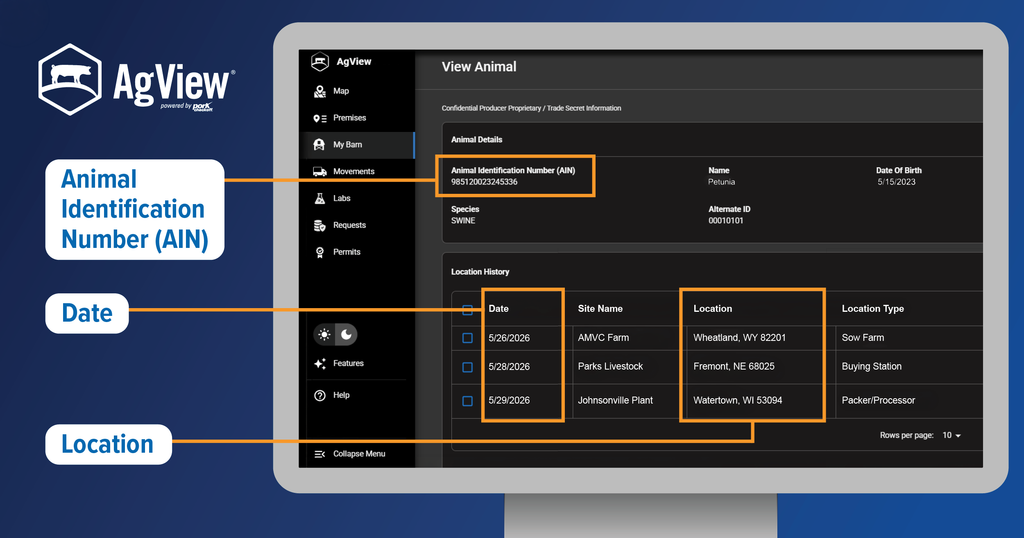
The RFID readers captured each animal’s identification number, while AgView brought the records together.
Once the upload was initiated, the API transferred the selected records from the Remote Inventory Portal into AgView. Those reads populated individual animal profiles showing when and where each animal had been recorded.
This success demonstrates an important opportunity to capture movement history. Because each sow had an individual electronic ID, it could be tracked when loads are divided and sent to differing end points as often happens with buying stations.
Participating buying stations and processing plants also received handheld RFID readers. These provide a backup when an animal misses a panel reader, bypasses it, uses a different entrance or exit, or is dead on arrival.
The AgView team is now working on controls that would allow producers to share panel reads from official 840 RFID tags with state animal health officials.
What the Pilot Means for Producers
The pilot showed that RFID tags, properly placed readers and AgView can work together to follow individual animals, even when a load is divided and the animals move to different destinations.
It also showed the value of testing the full process. The first exercise identified equipment and setup issues. Once the team addressed them, the plant captured every animal that arrived with its RFID tag intact during the second exercise.
This kind of traceability can help the industry verify animal movements more quickly during a disease investigation or response. AgView can organize those records while giving producers control over how their information is shared.
USDA APHIS Veterinary Services funded the readers under a cooperative agreement with NPB; a separate cooperative agreement with Merck Animal Health funded the RFID tags.
The pilot brought together a farm, a livestock buying station, a processor, an animal health company, technology partners, USDA and NPB to test traceability across a real-world supply chain. By working through the process together, the team identified practical issues, made improvements, and demonstrated how coordinated investment can strengthen traceability and disease preparedness for producers and the broader industry.
Interested in Learning More?
To learn more about RFID traceability and AgView, contact NPB Director of Swine Health, Dr. Brent Pepin, at [email protected].
The National Pork Board has responsibility for Pork Checkoff-funded research, promotion and consumer information projects and for communicating with pork producers and the public. The Pork Checkoff funds national and state programs in consumer education and marketing, retail and foodservice marketing, export market promotion, production improvement, science and technology, swine health, pork safety, and environmental management and sustainability. For the past half century, the U.S. pork industry has delivered on its commitment to sustainable production and has made significant strides in reducing the environmental impact of pig farming. Through a legislative national Pork Checkoff, pork producers invest $0.35 for each $100 value of hogs sold. Importers of pork products contribute a like amount, based on a formula. For information on Checkoff-funded programs, pork producers can call the Pork Checkoff Service Center at (800) 456-7675 or visit porkcheckoff.org.


