Steiner and Company produces the Profit Maximizer report on behalf of National Pork Board based on information we believe is accurate and reliable. However neither NPB nor Steiner and Company warrants or guarantees the accuracy of or accepts any liability for the data, opinions or recommendations expressed.
Highlights
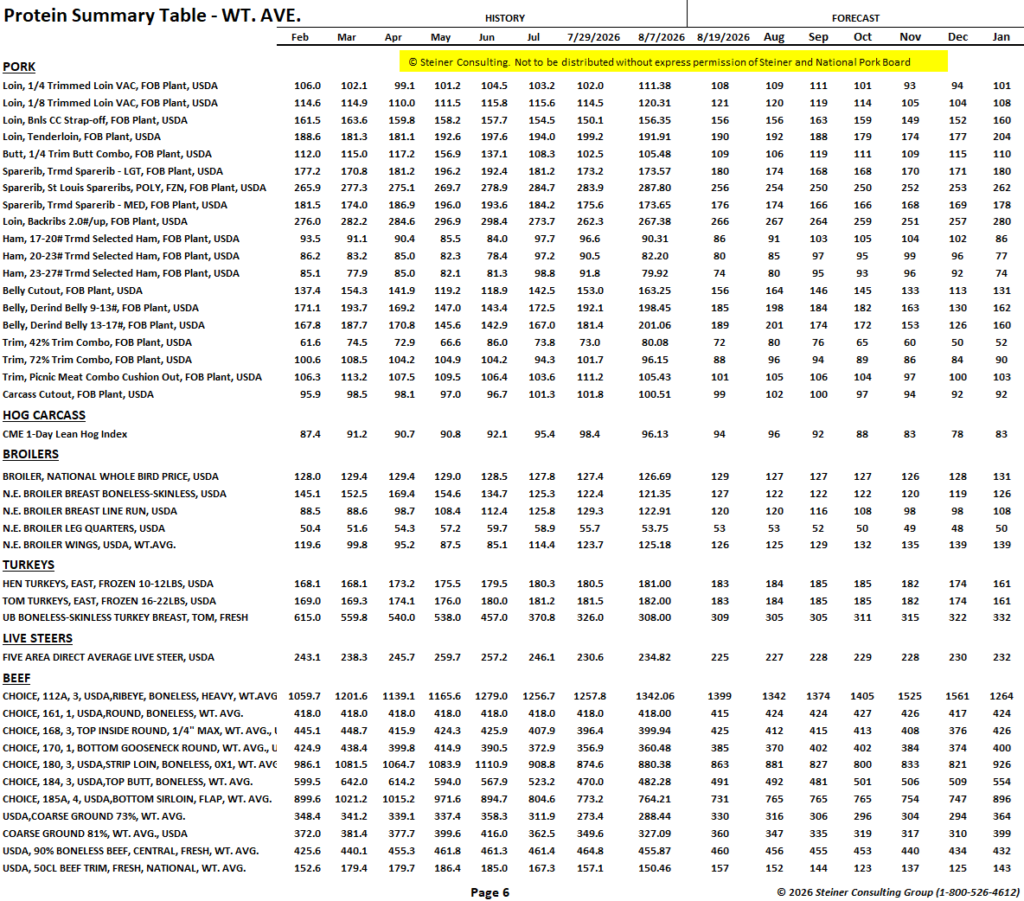
- It used to be that pork used for further processing was gaining value at a faster pace than the overall cutout. That appears to have changed and the weakness has been particularly evident this year.
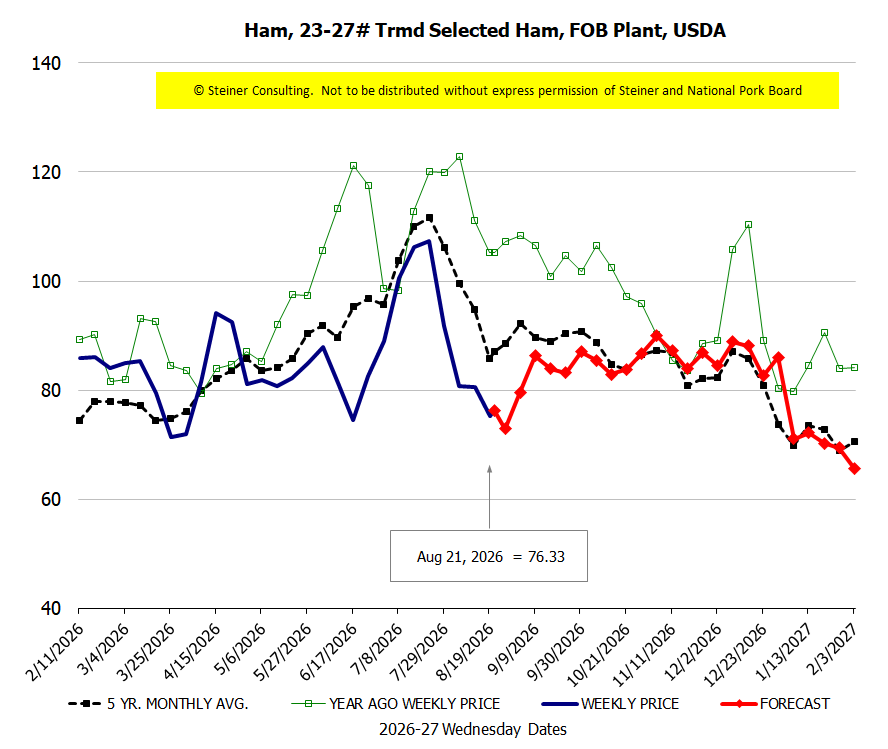
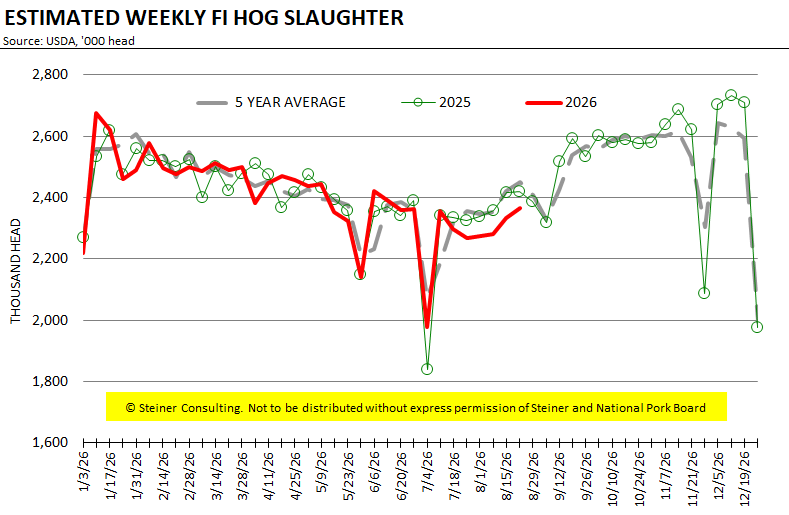
- Hog slaughter continues to run below year ago levels and yet that has had no impact on the price of bone-in hams, which at the end of the week was in the low 70s, near annual lows.
- Similarly, picnic primal value is currently 28% below year ago levels. Exports account for almost half of all the volume of hams and picnics produced in the US and weak global prices/stiff competition has significantly impacted pricing.
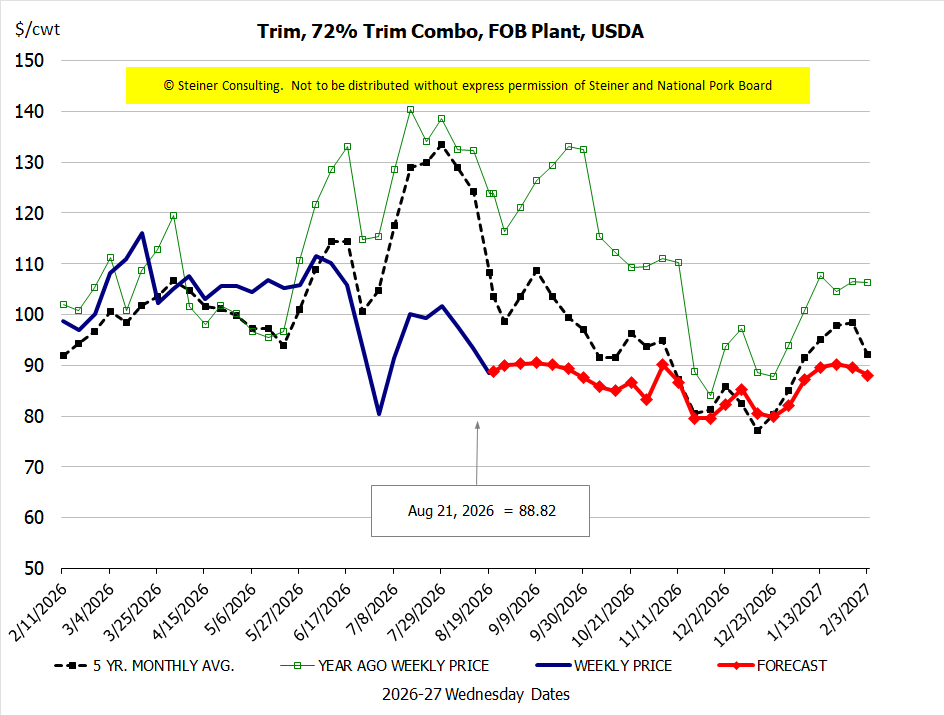
- Pork trim market is mixed, with fat trim performing better due to the seasonal decline in slaughter. However, 72CL (72% chemical lean pork trimmings) values have been under pressure as some boneless muscles are finding their way in the trim packages.
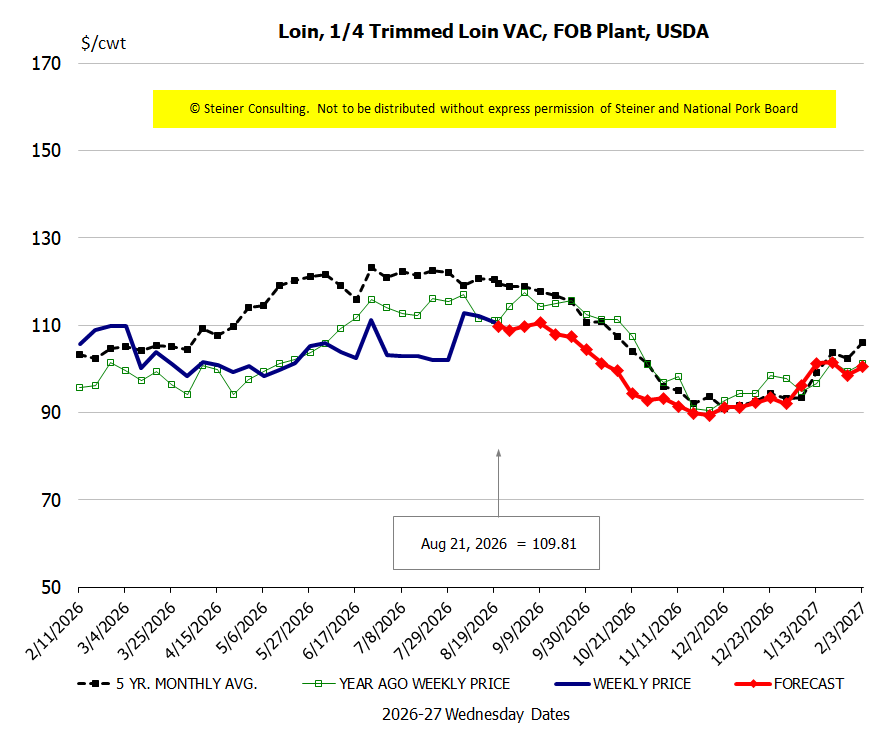
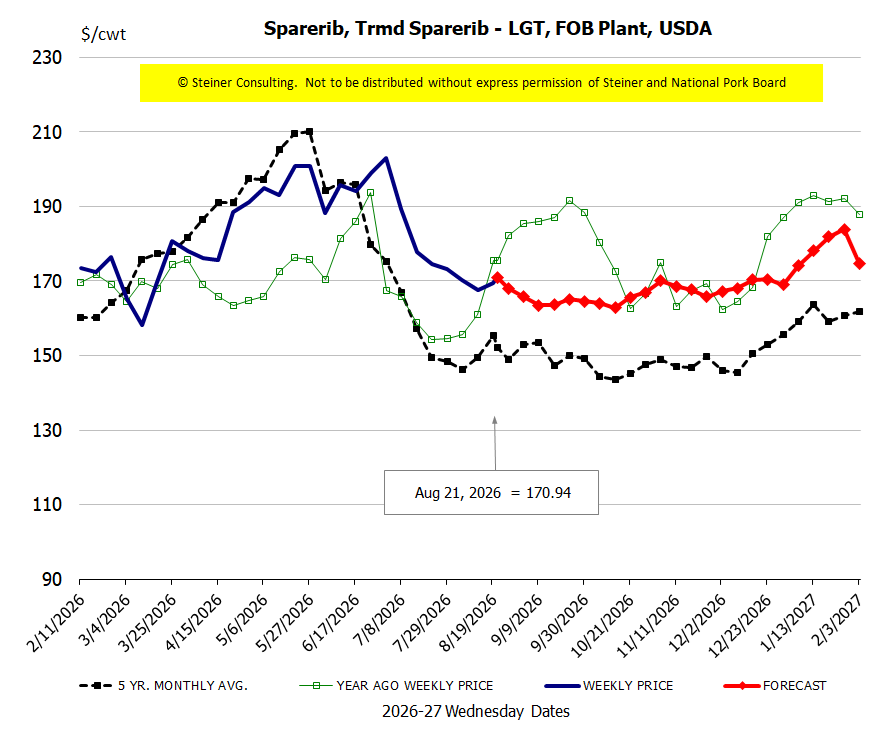
- Fresh pork values steady but still below year ago. Even ribs, that were well supported through the summer, have started to come under seasonal pressure and expected to be lower in the fall.
Full Report
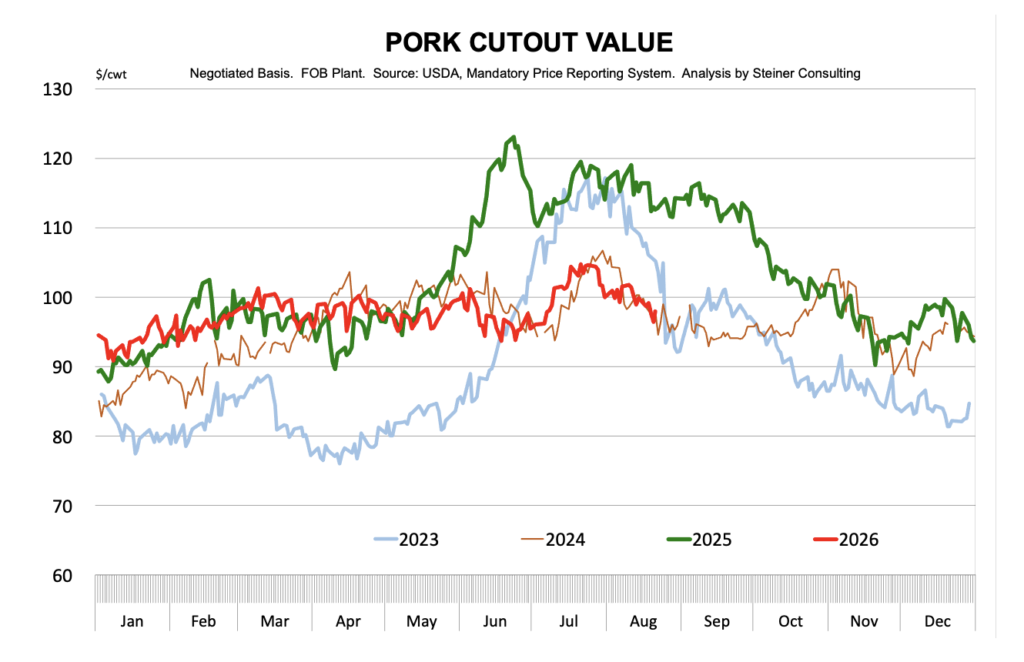
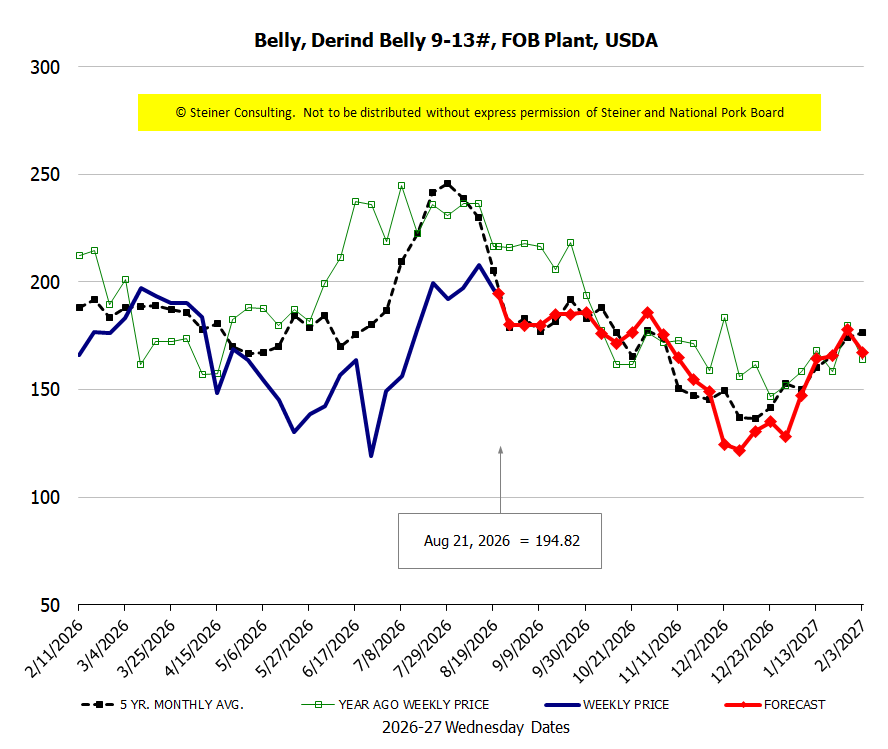
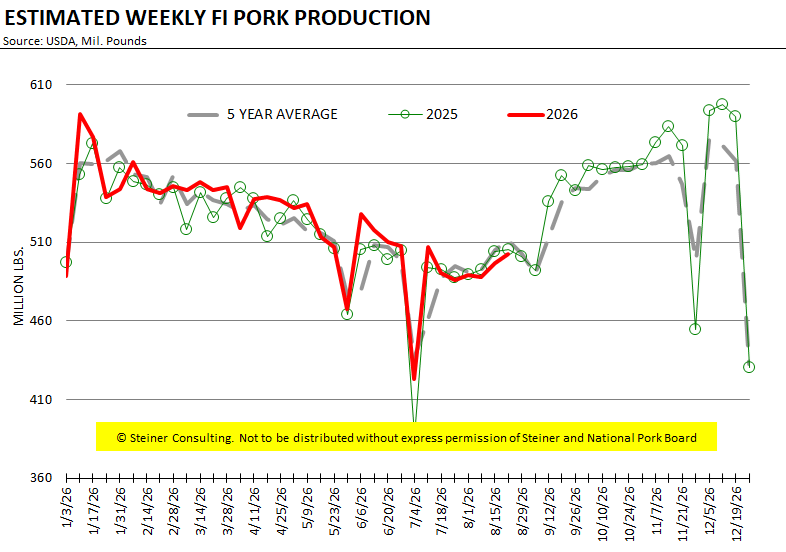
The pork market clearly has a demand problem. The pork cutout is currently around $98-99/cwt, down 15-20% from last year despite hog slaughter in July and early August running 2-2.5% below year ago and overall pork production still lower. We can think of a number of reasons for this: increased export competition, lower sales to Mexico, pressure on lower income consumers, reduced SNAP payments and increased GLP-1 use. But one factor that has received less attention is the negative press about processed foods, including processed meats. The price trend for pork trim and bellies tells us that these items no longer are a driving force in the pork market. In the case of bellies (bacon) they are lagging the wholesale index.
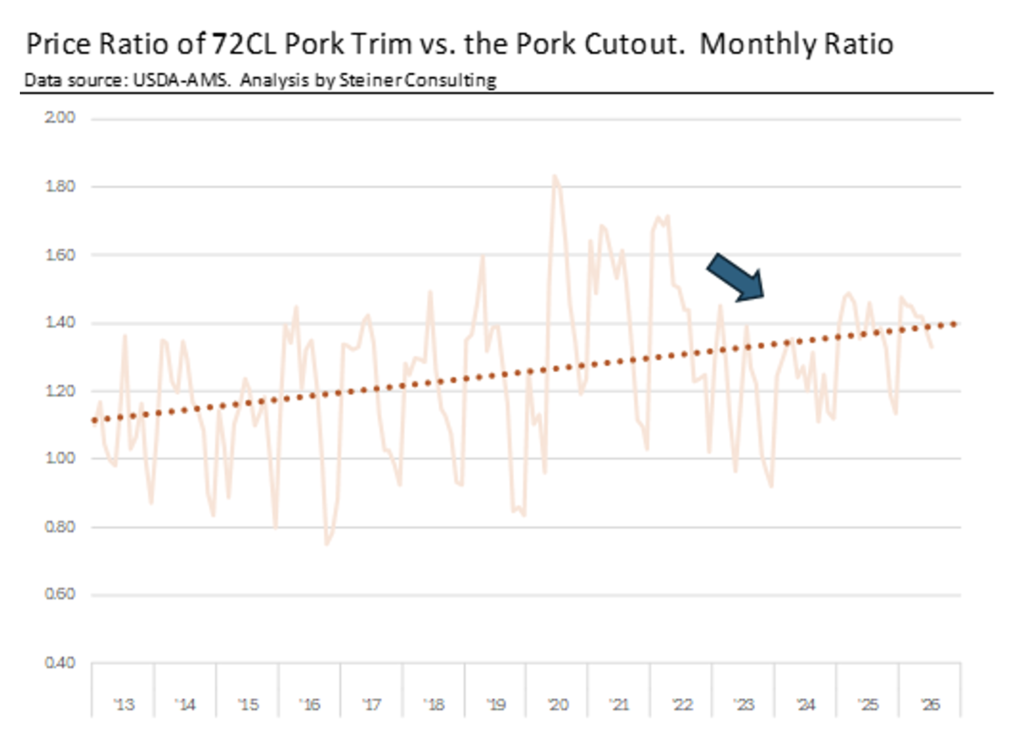
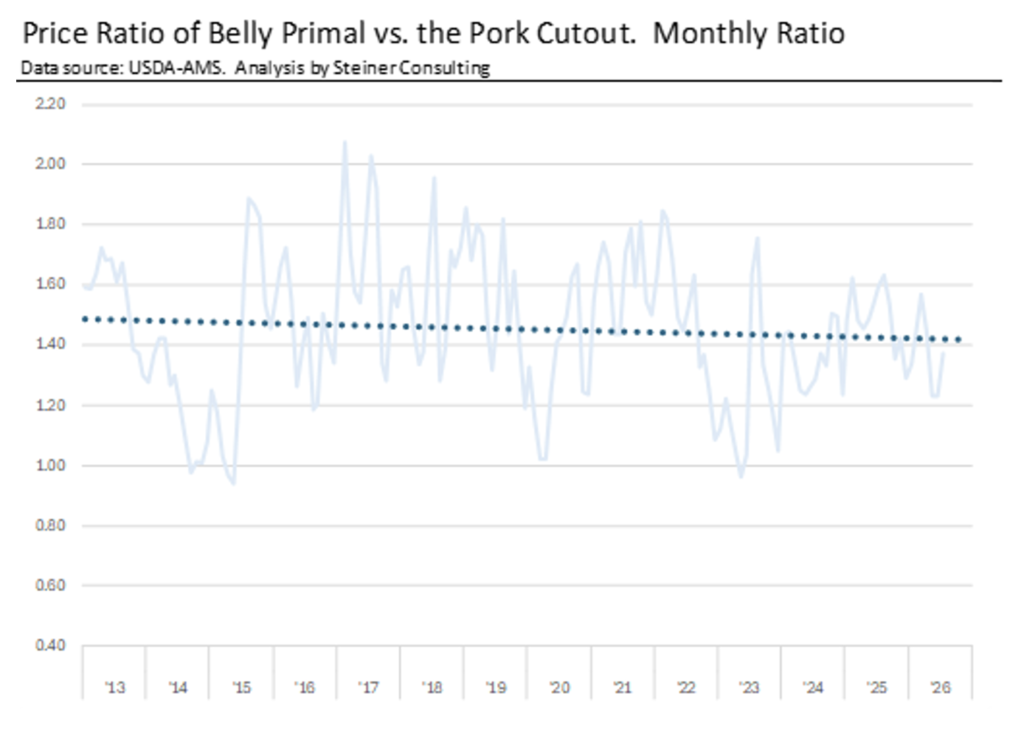
For instance, the value of 72CL trim relative to the pork cutout steadily increased from around 1.1x in 2013 to more than 1.6x in 2020-21, suggesting better sales/demand. Since then the ratio has declined and, at around 1.4x, is back to where it was a decade ago. The trend in bellies is even more pronounced. A decade ago belly prices were routinely around 1.8 times the cutout and at times as much as 2 times. This year the ratio has averaged just 1.37. It is unclear whether the movement away from processed meats is the main driver.
Higher processing costs and escalating inflation at fast food may be significant drivers as well. The result, however, is the same. If processing items are no longer generating the premium they once did, more of the burden for supporting the cutout, and thus hog prices, has to fall on other pork cuts, especially loins and shoulders.
Cold Storage Update
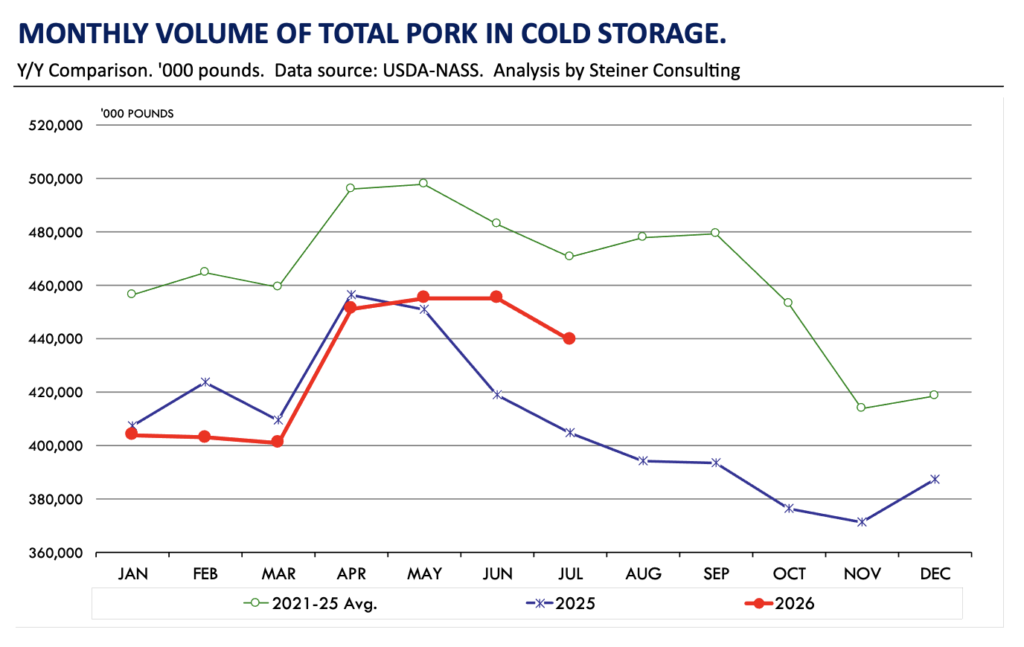
- The supply of pork in cold storage at the end of July was estimated at 439.4 million pounds, 8.6% higher than a year ago. We see the report as neutral for futures since inventory at the end of June was also 8.7% higher y/y, so no big surprise.
- The inventory of ham in cold storage was 155.9M pounds, 23.5% higher than a year ago. This is one of the more bearish numbers in the report and indicates why processors and traders are reluctant to put more product away despite the lower prices. This is the highest end of July inventory of hams in cold storage since 2018.
- The inventory of bellies at 36M pounds was 13.5% higher than last year but now 3.8% lower than the five year average. It appears that end users took advantage of the surge in prices to draw down inventories, which dropped 31% from the previous month.
- Inventory of all loins in cold storage at 34M pounds was 1.4% higher than a year ago. Inventory increased 6.1% from the previous month.
- The combined supply of the four meat proteins in cold storage at the end of July was estimated at 1.983 billion pounds, 1.5% higher than a year ago and 5.8% lower than the five year average.
Last year the inventory of the four main proteins increased 3.2% from the previous month and the long run average shows an average increase of 1.1%. This year, however, the inventory at the end of July was slightly lower than at the end of June, pointing to a robust drawdown pace. This was also the smallest end of July inventory since 2010, suggesting that despite the robust increase in production, especially for pork and chicken, product is not backing up in the freezer.
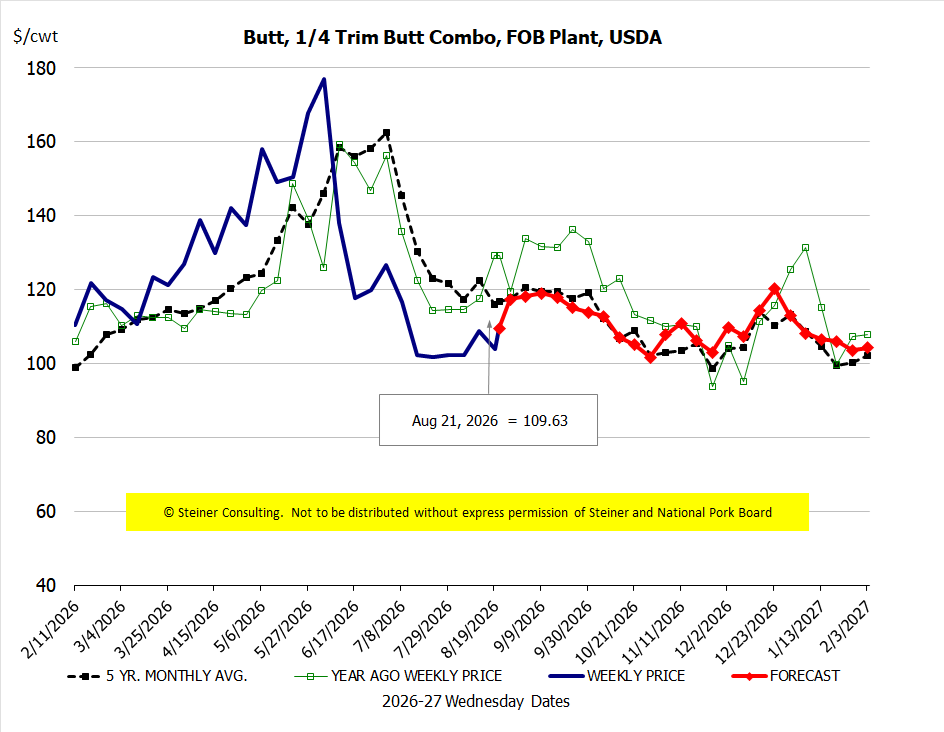
Price Chart
Forecasts
Steiner Consulting Group produces the National Pork Board newsletter based on information we believe is accurate and reliable. However, neither NPB nor Steiner and Company warrants or guarantees the accuracy of or accepts any liability for the data, opinions or recommendations expressed.


